The State Fair Project – Teaching Math

State Fair 2

When we developed The State Fair Project in fourth grade there were countless opportunities to use math.  During the year we were constantly looking at statistics for each state.  Size, population, socio-economic make-up, average temperature, significant dates…  All of these numbers were looked at and discussed.  The numbers were used not only to compare and contrast the 50 states but to develop some cause and effect hypotheses.

If the average temperature of a state was warmer than most, how would this effect the size of the population.  How about the average age of the population?  Why would older people tend to live in a warmer climate? Why would more Olympic skiers grow up in specific states?  But, why were there Olympic figure skaters training in Florida?

Every statistic became a jumping off point for further discussion and research.  Questions created more questions.  The use of math was constant, fluid, and authentic. (And of course, reading and writing skills were strengthened as well.)

*This authentic project can be easily adapted for territories, counties…whatever system the country you are studying uses.

The Holidays – Giving IS Better than Receiving

IMG_20181005_074229199

So, I will admit to being a total addict to the Hallmark Channel once the holiday programming starts.  Yes, I totally get it that it is the same script, with minor changes, rotating a handful of actors, in every single show.  But there is just something addicting about these shows.

Hallmark really does a fantastic job of catching the perfect holiday season.  And excuse my arm-chair psychology here – but I think very few, if any, people experience a perfect holiday season.  There is the huge build up, and then the let-down as plans don’t work out as expected.

This is bad enough for adults, but imagine the let-down for the child who doesn’t yet understand that there really is no such thing as a “perfect” holiday.  This is even worse for the children in our population who are bombarded with the television shows and advertisements showcasing that perfect day, and in their world, this couldn’t be farther from the truth.

This is why I think that the holidays are the perfect time to teach “giving” as the most important part of the season.  This can start with even very young children.  If the season includes a focus on making others happy, it is harder to be disappointed.

I have tried to give as many gifts as I can that tie into charity organizations.  From buying holiday cards that make a difference, to gifts that give back.  Donating to Toys for Tots, picking a family from an Angel Tree…there are so many ways to give back.  Not only will this make the holiday season better for you and your kids, it will brighten up the season for those in need.

Well, gotta go…the next show on the Hallmark Channel is starting!

Authentic Project Ideas – NASA’s InSight

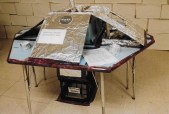
Scan 9   Student Designed and Built Lander      

NASA successfully landed another spacecraft on Mars last week.  My husband and I watched the landing and both of us had tears in our eyes.  It is so totally amazing when you stop and think about what NASA has accomplished.  We were just blown away.  (We were also very impressed with the extremely cool “Star Trekkie” shirts that everyone in Mission Control was wearing during the landing.  Don’t tell my husband, but one is on order for him for a holiday gift!)

The mission of this stationary craft is to study the deep interior of Mars.  Launched along with InSight but flying separately were two CubeSats.  MarCo A and B, nicknamed Wall-E and Eva (from the Pixar film Wall-E) are now in orbit around Mars.

The authentic projects that students could do regarding InSight and the CubeSats are endless.  What is InSight’s mission?  What mission firsts will take place?  Is InSight a rover?  What is the mission of the CubeSats? If you could design a mission to Mars what would your design be?  What would you hope to accomplish?  This list could go on forever…

My Martian Colony Project started by simply showing a fifth-grade class NASA videos of the Martian Rovers Spirit, Opportunity, and Curiosity.  This authentic project took off from there and literally took over my professional life for the next four years!  (For more on this check out my book One School’s Journey – you can read it for free on Kindle Unlimited.)

Authentic Project Ideas – Ships

IMG_20180812_194911 copyLooking down off of a moving cruise ship – the pilot has just jumped off and is being helped by a crew member on the pilot boat.

I was recently talking about how amazing big ships are – how those gigantic machines can be so carefully maneuvered.  The person I was chatting with didn’t realize that pilots hopped on and off moving ships to bring them into and out of ports.  I knew a lot about ship pilots because one happened to live in my mother’s apartment building in Fort Lauderdale.

Several ways an authentic project about ships could go, and probably many more depending on student interest.  How do these large ships work?  What are the mechanics and technology on a ship? What are all of the jobs that people have who work on ships? (That is a long and fascinating list, including the pilot mentioned above.)  All of these questions have different answers depending on the type of ship the student is interested in – Cruise Ship, Merchant Ship, Naval Ship…

Plan a trip, design a better ship, plan a career…

Bon Voyage!


Technology and Raising a Socially Responsible Child

IMG_20180922_162713149

Technology and raising a socially responsible child are totally and irrevocably connected today.  This starts with the toddler who is exposed to technology that if not monitored and controlled by a parent, can replace human interaction.  It would be difficult to argue that this is a good thing.

Human interaction, those skills that are developed early in life, are invaluable in the child’s growth and readiness to enter the school system and succeed.  However, understanding and using technology is also invaluable in the child’s growth and readiness to succeed in school.  So, what is the balance?  How should technology be used with a young child?

There are few parents of past generations who at some point did not use the television set as a “babysitter.”  With the advent of Sesame Street and Mr. Roger’s Neighborhood, there were some excellent shows on television that moved past “babysitting” and into early education.  Almost 50 years ago, my youngest brother discovered the delightful Cookie Monster, who while teaching various preschool skills, would also trade anything for a cookie.  And I will never forget Dr. Sally Ride, in an orange NASA jumpsuit, introduced on Sesame Street as the “world’s expert at counting backwards!” “10, 9, 8, 7, 6, 5, 4, 3, 2, 1, 0, Blastoff!”  This was and continues to be great stuff.

It was fairly easy for my mother to control what we were watching on television.  Most families had one television, in a family room.  Eventually, I had a small television in my bedroom, but my mother had a trust that I would use this appropriately, and honestly with only four channels, there wasn’t a lot of trouble I could get into. Star Trek, Lost in Space – she knew what I was watching, was horrified, and positive I would scare away potential boyfriends or husbands with my infatuation with sci-fi. (I married a NASA scientist.)

So fast forward to today, where there are hundreds of television channels available, many on portable devices.  There are social media pages and apps for everything.  Books, games, etc.  How do you even begin to control this?  To limit or deny exposure impacts a child’s ability to navigate technology, a skill that is expected with incoming kindergartners.

This access to technology started to explode while I was raising children.  You monitored what you could, definitely limited the amount of time kids spent “on-line,” and also assigned some responsibility to your child, based on what was age appropriate.

There really is not a hard a fast rule that applies to how much time children should be allowed to be “on-line.”  This varies by family and is also situational. Like everything else as a parent, monitor and begin to teach responsibility.

One thing you don’t want to do as a parent is to back yourself into a corner with rules and regulations, and then have to back-peddle later.  For example, on long drives and plane rides technology is invaluable.  I don’t know of an adult who hasn’t made a long trip more bearable by reading or watching a movie.  You don’t want to have a one-hour limit on technology in place, and then change that every time a new situation pops up.  And you don’t want to go on a long car ride or plane ride with a whining two-year-old when you can make the trip so much more pleasant with technology.

There is nothing wrong with starting to teach children that there is a constant evaluation going on about when and where the use of technology is appropriate.  Model your thought process out loud, and begin to teach them to make these judgment calls themselves.  The bottom line however, is that when you say put it away, it is put away.  And remember, you are constantly modeling this behavior yourself.
 

Real Authentic Learning

IMG_chocolate chips

Doing projects with kids is a great starting point for learning.  But the goal should be for the authentic learning experience.

Following directions for an arts and crafts project, or following a recipe, is definitely great practice using reading and math.  However, if it stops there, the opportunity for real authentic learning is lost.  I don’t think we can state often enough that we are raising children to function in a world that we can’t possibly imagine.  Many of the jobs they will hold in the future don’t exist yet.  And more importantly, many of the jobs people hold today, will not exist in the future.  The children we are educating today need to be able to think outside the box if they are going to have a chance to really succeed in the world they will live in as adults.  Simply following directions to get from Point A to Point B, or repetitive drills filling in correct answers on a worksheet, is not going to prepare them for the future.

Following a recipe, or a set of instructions, should just be the starting point.  The real authentic learning occurs when adults listen to what children are saying while they are working, and follow up on this discourse.  Why just one cup of chocolate chips?  What would happen if we used two cups?  Do generic chocolate chips really taste the same as the more expensive Nestle brand?  Can you taste the difference in the finished product?  How can we test this?…

Sometimes adult prompting is needed to take the project to the authentic level.  But often, just listening to children, really listening, provides the springboard to that authentic learning experience.

Authentic Project Ideas – Surviving on a Deserted Island

IMG_Maine Island 2

While on a recent journey through the northeastern waterways of the United States and Canada, I saw one small island after another.  Thinking back on the authentic project I was involved with about establishing a colony on Mars, I started to imagine what it would be like to survive on one of these islands.  What would I need to survive?  What would I eat, what kind of shelter would I need, what kinds of clothes would I need?  (OK-this is definitely a fictitious authentic project as personally I need a five-star hotel in Bar Harbor, Maine, with plenty of lobster, and lovely clothes available in the local boutiques-but I digress…)

This project would vary based on where the island was located as needs would be different based on climate, natural resources, etc.

Authentic Teaching – The Read Aloud

IMG_Titanic 2

From my Exceptional Parent/Teacher Guest Blogger Carissa Yfantis-

“The wind began to blow. The tree house started to spin.” In case you don’t recognize those famous lines, they are from ​The Magic Tree House​ series of fiction adventure books for young readers. They are the opening lines that lead the main characters to an adventure in each book. When my daughter was 4 1⁄2 years-old, my friend gave her a complete set of the first 28 books for Christmas. She had begun reading them to her own daughter when she was four, and they both adored them. My friend assured me that if we read them aloud to my daughter, we would all love them, too. At first, I wasn’t sure if the stories and themes would be too mature or too frightening. I previewed a few of the books, trusted my friend, and embarked on a six-month read-aloud adventure.

Back then we read aloud to our daughter at least twice a day, before afternoon rest time (formerly known as nap time – naps were a distant memory at this point, even though ​I​​still needed her to take one) and at bedtime. This gave us plenty of opportunities to read these chapter books aloud. As promised, we all loved the books immediately. Each one is based on a specific event or time period from history. Even though she was quite young, we were able to teach her little bits of history (edited as necessary to be age-appropriate) as we read the different books. Our daughter was totally engaged with the stories, and the illustrations scattered throughout each book gave a visual representation of important points in the text.

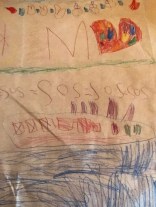
I was happy to enjoy the stories and squeeze in some history, but the best part of reading these books was the few times when my daughter was inspired to create things from the stories. At some point during our second reading of ​Tonight on the Titanic, she decided to draw a picture of the ship with SOS above it. ​On her own.​ (I need to mention that we did not tell her anyone died, just that the ship sank.) I was overjoyed. The history had truly become authentic for her. In ​Haunted Castle on Hallows Eve​, the two main characters turn into ravens. We discussed what ravens were and found photos of real ones on the internet. There were also illustrations of ravens in the book. One day, she made raven’s wings out of black construction paper and a beak out of yellow paper. She asked me to tape them to her arms and face. Again, this was o​n her own.​ Knock me over with a feather. She had an authentic learning experience because this piece of the story was interesting to her.

When you read aloud with your children, whether you read to them or they read to you, there will be many opportunities to converse about the subject matter. With the world at our fingertips, you can quickly find photos, definitions, and facts about topics that interest them. Authentic learning takes place when your child actively explores a topic in a way that is meaningful to her.

By the way, lest you think we have some sort of child prodigy, her spontaneous bursts of creativity have dwindled considerably since ​The Magic Tree House​ days. Okay, they’re basically gone, but it was amazing while it was lasted!

IMG_Raven's Wings 2


Authentic Project Ideas – Lighthouses

IMG_Portland Maine Lighthouse

I recently returned from a journey where I saw many wonderful and enchanting lighthouses.  There are so many different questions that I thought about while enjoying all of these lighthouses.  How do they work?  What purpose do they serve?  How did they operate in the past?  How and why are lighthouses built today?

What would I include in a lighthouse if I designed one? (My lighthouse would resemble a five-star hotel –  just saying.)

There are so many interesting stories about lighthouses of the past that could be a jumping off point for authentic projects.  I heard about a lighthouse keeper in Portland, Maine who became bored with just tending the lighthouse.  He began to carve wooden horses that he sold for 75 cents to the local market.  Today these horses are worth thousands of dollars each.  An authentic project could be to develop other ways to pass the time while tending a lighthouse.

While purchasing a memento of the Egg Rock Lighthouse in Bar Harbor, Maine, the charming woman at the cash register introduced herself as the granddaughter of the last keepers of that lighthouse.  She briefly shared her story with me.  I wish I had had time to hear more about her grandparents!  Another jumping off point for an authentic project, reading stories about past lighthouse keepers, and perhaps creating a compilation, journal, or even writing new stories based on past stories – endless possibilities…       IMG_Grace Little Village Gifts Bar Harbor  Grace, whose grandparents tended the Egg Rock Lighthouse near Bar Harbor, Maine


ONE SCHOOL’S JOURNEY By Eleanor K. Smith and Margaret Pastor

One School's Journey_cover

Available on Amazon.  Read for free on Kindle Unlimited.

I am very excited to announce that my book about Authentic Learning with my former and forever principal, Peggy Pastor, is now available on Amazon in both paperback and Kindle editions.  Click on the Amazon link above to check it out!

One School’s Journey tells the story of an elementary school in Maryland, in the suburbs near Washington, D.C.  The school’s student population is extremely diverse, with students representing many races, socio-economics levels, and academic abilities.  The path towards the use of authentic projects to teach and reach this diverse population is chronicled by the two authors –  Eleanor K. Smith (me), a teacher, and Margaret Pastor, the building principal.

While offering procedure, guidance, and examples, this is not a book of lesson plans.  Our bias is that for true authentic teaching you cannot follow someone else’s lesson plans.  Authentic projects come from the heart and are adapted to meet the needs and interests of the students.

This book is about the journey of the staff at our elementary school, as we set down the path to discover how to engage our students.  What was not a surprise, was that when children are engaged, they learn. And authentic projects engage the learner.   Our hope is that the reader will find inspiration from what we discovered along the way.