Authentically Teaching Across Subject Areas

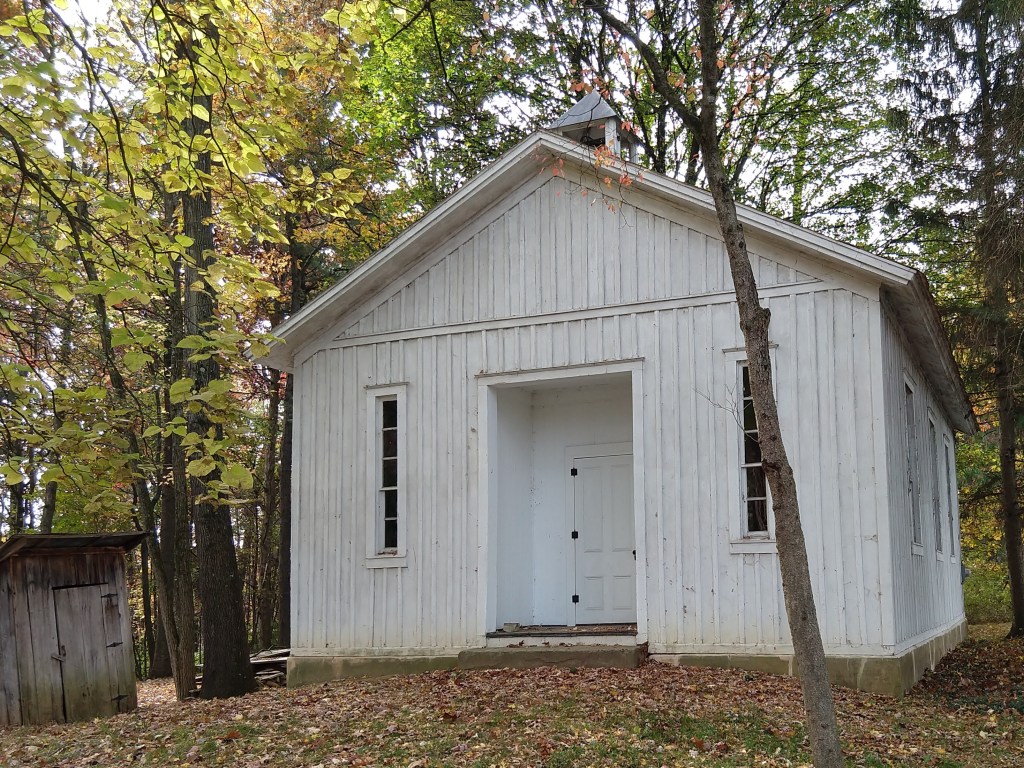
One Room School House

I once again decided that I needed to refine my blog and sort the authentic project ideas out by academic subject area.  Having been posting on this blog for over two years, it is becoming hard for even me to find what I wrote on certain topics.

So, I started to sort the posts out by reading, writing, math, science, social studies… And after about ten posts I realized I was posting every post under every academic subject area.  That is actually the point of authentic learning and using authentic projects to teach.  Teaching in isolation is isolating – that was profound!  Learning reverts to rote and meaningless – information to be accumulated to finish a worksheet, write a report, or memorized to pass a test.

When learning authentically, the subjects should be integrated.  Yes, a math teacher is responsible for teaching math, but by making it real and making it count, you are also teaching reading, writing, science…  And your lessons are meaningful to the student, and will be internalized. 

In a way, the teachers in one-room schoolhouses of the past had a huge advantage as they naturally had to teach this way.  Across all the academic subjects, across grade levels, with limited access to text books, and no worksheets.  Yes, they did a lot of drilling that we don’t have to do today because children don’t need to memorize, they need to learn how to access information. Access that wasn’t available in a one-room schoolhouse.  There was no internet, there were no calculators. But there also were no monstrous curriculums that needed to be covered with far too much information and far too little time. They had the same students for years on end, they got to know their students, and they had no choice but to make it real and make it count. It was a matter of survival, not a matter of a child passing some exam at the end of the year that had little to do with what mattered to them and their lives.

Yes, I am looking at one-room schoolhouses with rose-colored glasses. And yes, some teachers got paid in apples and horses – probably not the preference of most teachers today. (I won’t even comment on the out-house at the side of the one-room schoolhouse pictured above – thank you modern conveniences!) But there are some interesting authentic lessons to learn by looking back to the past.
Authentic Teaching – Engaging Your Learners

If your goal as an educator is to engage your learners, then authentic teaching is what you want to do. It works.  Why?  Because your learners get to explore what interests them, within the constructs of your objectives and goals.  I’ve used the analogy before, they are in the driver’s seat, but you are navigating.  Or maybe you are in the driver’s seat, but they are navigating.  I think it goes back and forth actually. But the bottom line is that they are exploring topics of interest to them, while you are meeting your own objectives and goals.

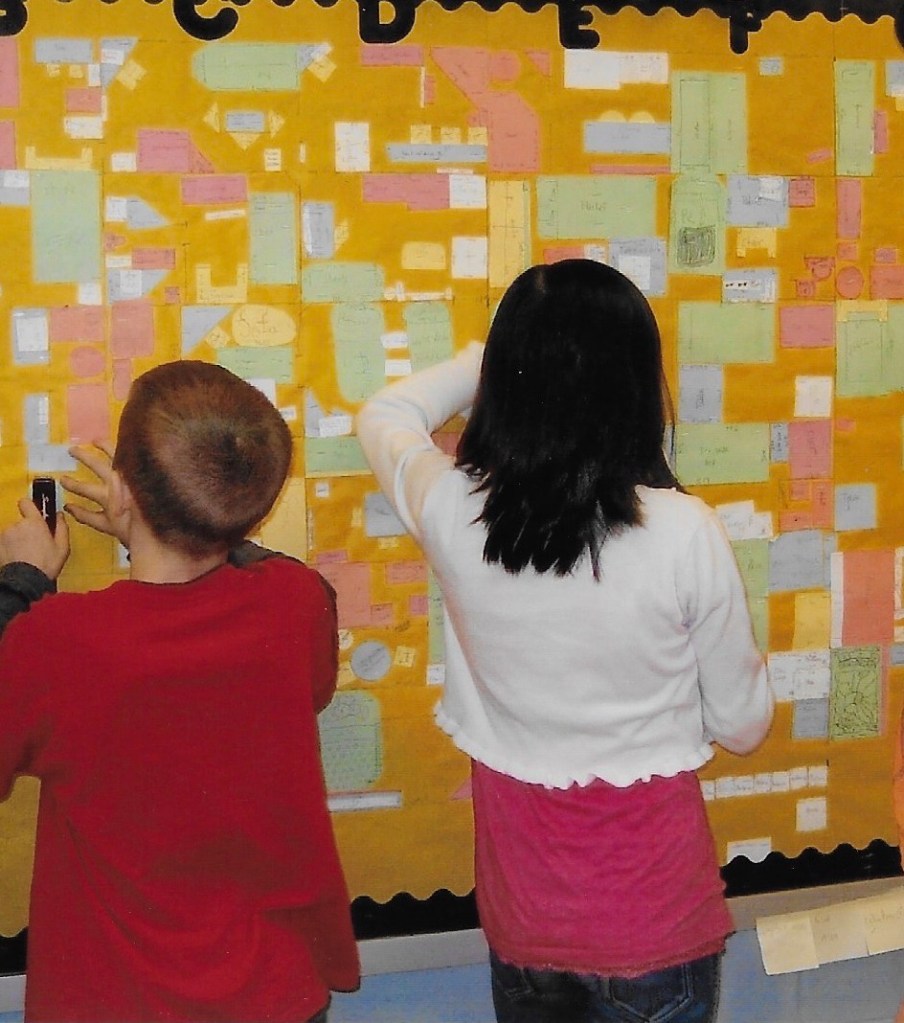
The photo above is from the Martian Colony Project that I was very involved with.  These fifth-graders came in from recess to work on the colony board.  The board was a great vehicle to teach many math skills – perimeter, area, scale, map grids…  But the students were also reading (research about Mars and everything else they wanted to incorporate into the colony), writing (writing about their colony plans), working with science, social studies…

And they were able to easily explore their own interests within the colony.  The colony had sports teams, a spa, snack bars, health clinics…you name it and the colony had it. 

So, substitute a project designing a new office building, a sports complex, a university, an airport…the authentic list is endless. 

Authentic Teaching – Horses to Football

Working on a recent blog about project ideas for horses, I was thinking that really this blog could be about any animal.  Which got me thinking that any of my blogs could be about something similar…or not similar.  That is what authentic teaching and learning is all about.

The point of authentic learning is to present an idea, and see where your learners take you.  You are still in the driver’s seat, but you are allowing your learners to navigate how you get there.  As long as you get there, that is the point.

So, if your goal is to learn about animal habitats, and you suggest an authentic project about horses, and your learner(s) are more interested in dogs, or cats, or snakes (yuck), then that is fine.  And if your learners are only interested in football…and they want to read about football and write about football…the history of football, create a timeline about the sport, design a football stadium.  Start pulling in all of your goals into football. 

So, we started with horses and now we are on football.  Back to animal habitats…how many stadiums are home to wild animals? What kinds of animals?  How did they get there? Has a wild animal ever interrupted a game?  What happened?  That is authentic teaching and learning.

Authentic Project Ideas – Cliff Divers

Put this under the project idea category of “you have got to be kidding me!” This is what these folks do for a job.  They dive off of cliffs.  I have never been so glad that I earned my living as a teacher!

This photo was taken in Acapulco.  Our guide told us that none of the divers have ever been seriously injured.  They start out as children and learn to dive off of the lowest rocks and gradually move up. My daughter was a competitive gymnast and it was fascinating to watch how gymnasts learned new skills.  It took years to develop some skills and by the time they were doing them on different apparatus they were so well trained for so long, you really didn’t worry about them getting hurt. 

Still, watching the divers, I held my breath!

So how long does it take for a diver to master the highest cliffs?  Are there cliff divers in other places?  What is the history of the Acapulco cliff divers? (Research, time line, report, display, Power Point…)

Do they use math when they dive?  How?  Could computers be used to make their dives even safer?  How? How are computers used in other sports to improve achievement and safety?

While I really push the idea of authenticity, please don’t authentically dive off of a cliff to research this topic!

Authentic Learning – Never too Young to Explore Books

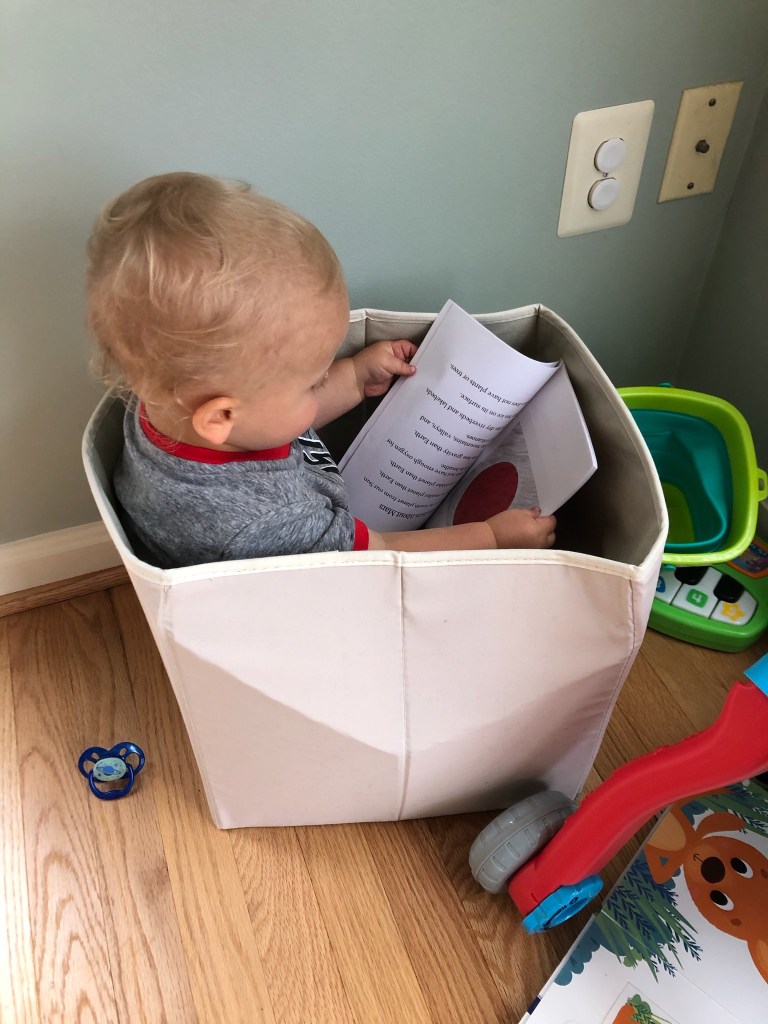
Authentic learning can’t start too young.  Exposing children to books and reading should start the day they are born.  As they grow, let them explore and enjoy books that interest them, on their level. 

Having a rich reading environment for children is hugely important.  Not only having lots of high interest reading material available, but having care-givers that model reading as well.

And remember, reading is reading. It doesn’t need to be Shakespeare for a child to grow as a reader. I am a voracious reader, mostly sci-fi. I don’t believe I would be the reader I am without sci-fi. No offense to the Great Bard, but not my cup of English tea. I’ve been reading sci-fi since I was old enough to hold a book. And now I write it!

And yep – that is my book, Tex the Explorer: Journey to Mars.  And yep – it is upside down! (Authentic Exploration)

Authentic Project Ideas – The History of the Elevator

I did a post about elevators a while back, but this one was too cool to pass up!

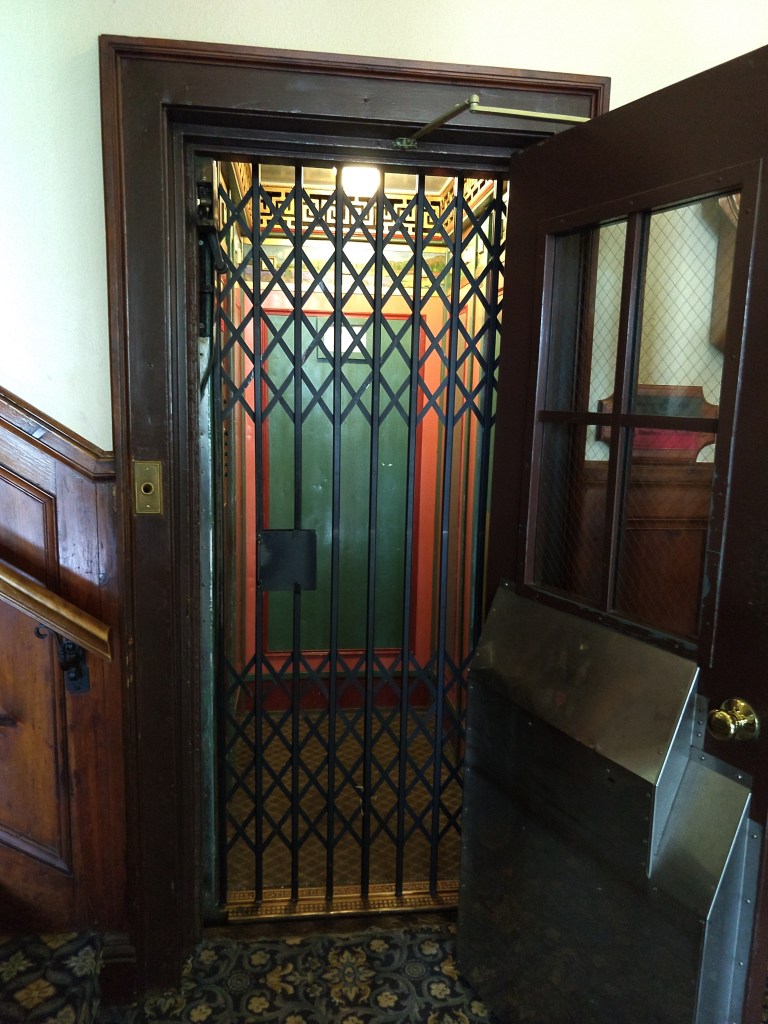
We just returned from a historic lodge which had this elevator.  You opened the door and then pulled the gate back to get in.  There were modern elevators in the lodge also, but we went out of our way to always use this one. The only other time I have seen an elevator like this was in Europe years ago. 

So, what is the history of the elevator?  Who invented it? Where was it invented?  (Reading)

Design an elevator (Math).  Construct an elevator (Math).  What will elevators in the future look like (Writing/Math)?  Lots of authentic ways to go with this…up, down…sideways?

Authentic Project Ideas – Designing a Carousel

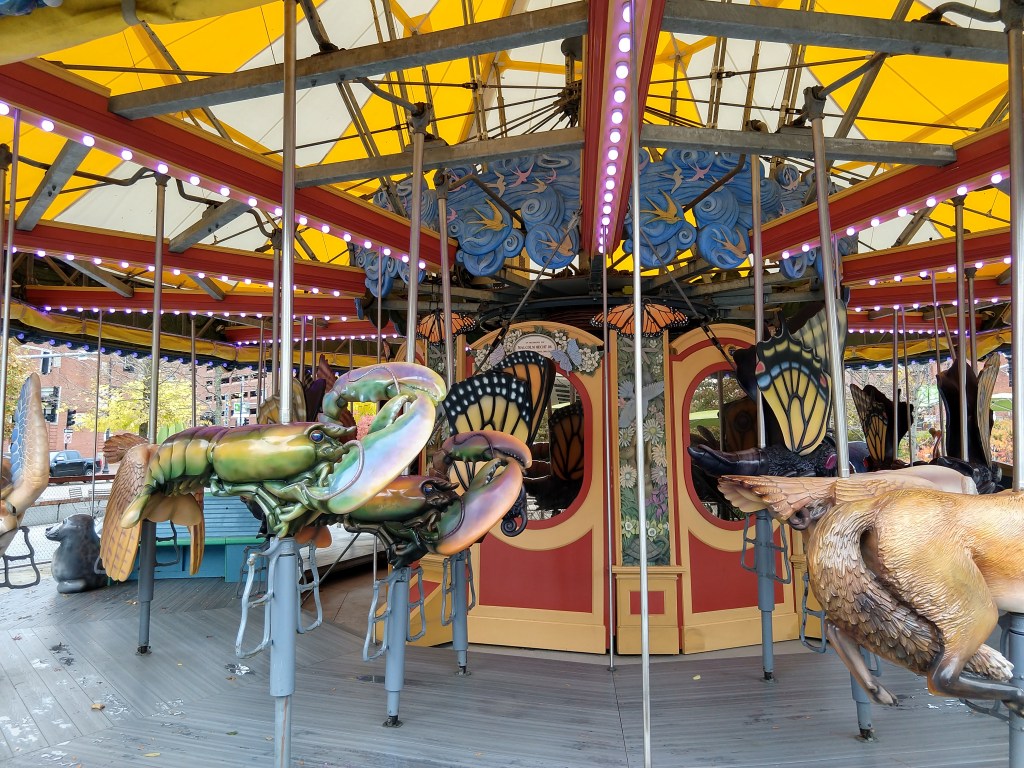
I saw this whimsical carousel in Boston.  I love the sea-life included in the carousel, so appropriate as Boston is all about seafood!

It would be a fun authentic project to design a carousel (lots of math, lots of writing) and perhaps incorporate a theme from where you live, or what you enjoy, into the carousel.  It could feature famous landmarks, favorite sports, characters from books…

Your students could even build a model of their carousel.  A working model could incorporate the authentic topics of energy and motion.

Maybe even design and build a model amusement park.  With authentic projects the sky – and beyond – is the limit.

Authentic Teaching

My daughter was taught reading in fifth grade using a very analytical program developed for above grade-level readers.  It was very researched-based.  Lots of solid educational theory behind it.  She was a voracious reader.  By the end of fifth grade she hated reading.  She hated books.  She refused to read.  (With a fantastic reading teacher in sixth grade, my daughter discovered her love of reading again, thank goodness.)

Why?  This program picked books apart.  The kids had to analyze them to death.  Every chapter was torn apart and looked at.

Think of it this way.  View a gorgeous Monet painting.  Stand several yards back and take it all in.  Breath-taking.  I fell in love with art through the work of Monet. Now, press your nose up to the canvas.  Pick it apart. Analyze the color.  Analyze the strokes.  Not so great anymore, is it?

I see the same thing happening with project based learning, what I call authentic learning.  Semantics – project based learning, authentic learning, learning through play…everything has the same goal – to make learning real, make it worthwhile, make it count.  Not only are folks hung up on the semantics, they are hung up on planning every detail out ahead of time, getting plans from others, following commercial programs – not authentic at all.

Don’t do to authentic projects what that reading program did.  Don’t pre-plan and pick apart the experience until you destroy the spontaneity and joy of learning for you and your students.  Go with the flow, as the captain of your ship keep it on course, but allow for your passengers to experience the choices from the buffet along the way!

Authentic Project Ideas – Creative Recycling

I love entering photos and crafts into our local county Grange Fair (which sadly won’t be taking place this summer due to Coronavirus).  One of my favorite categories to view is the craft category of turning something old into something useful again.  I have never entered, but it is so cool to see what people do.  Old jean shorts turned into purses, t-shirts turned into quilts, glass bottles turned into lamp bases, fronts of old greeting cards turned into new cards…

I saw this at a local restaurant and it reminded me of that category.  Simply taking old horseshoes and turning them into a menu holder on the wall. I don’t think this would be a ribbon winning entry – not overly creative – but it is certainly a really cool authentic way to recycle.

So, authentic project idea – turn something old into something useful again.  Write directions for what you are creating.  Include any needed math.  Maybe somehow turn this into a community service project – creating something to cheer someone up…lots of ways this project could go.  I would love to hear what your learners come up with!

Authentically Teaching All Subjects

I had an idea to refine my blog by adding more topics to my menu, breaking down my ideas into reading, writing, math, science, and social studies. As I started to look at my entries, I realized that if I did this I would be moving away from exactly what I am trying to promote – teaching authentically.

If you are teaching authentically, then you are not teaching in isolation. If you are authentically teaching math, it should involve research/reading. If you are authentically teaching reading, it should involve social studies, science, and math. Writing should be authentically incorporated into every subject, it should not be an exercise unto itself.

So I am going to leave all of my ideas for authentic projects under one topic. It really shouldn’t make it more difficult to find an idea, as the whole point of my blog is to give you lots of ideas to think about and see if one resonates for you and your students. Need to teach area – design a dream house, measure for carpet, plan a new park, figure out how many chocolate chip cookies can fit on a cookie sheet… (And send me the recipe please – still looking for a great chocolate chip cookie recipe!)