Authentic Project Ideas – Snow

1158

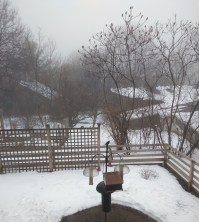
What causes snow?  How does snow form?  At what temperature does snow form?

Rain, freezing rain, ice, snow…what happens to cause each of these?

Are there different types of snow? What are the best conditions to build a snowman?

These prompts could also lead to authentic projects about how artificial ice and snow are made?  Maybe even the creation of a working model artificial ice rink or ski slope…

Or…how is snow made for all the holiday specials on television when it snows exactly when the script says it should?

I live in a northern climate and absolutely love the snow.  Snow means hot chocolate, warm fireplaces, and catching up on my reading!
 

Authentic Learning – Measuring Snowfall

snow.jpg

Not everything needs to be a big project to be authentic.  Tracking snowfall can be a great authentic way to learn measurement and graphing.

Use a ruler to go out and measure how much snow is on the ground after a snow fall.  Track measurements through one storm, or through the entire winter season. Create a graph with your results. Discuss different types of graphs and what graph would make the most sense to use and why.  If you are in the US, have your students measure using both inches and centimeters.  (If you don’t have snow where you live – count yourself fortunate – you can measure rainfall.)

Working with a group of fifth graders, I had them measure paper to cover bulletin boards.  These kids had completed hundreds of worksheets on measurement, yet none of them were comfortable using a ruler. Not one of them knew how to approach measuring a bulletin board – after completing hundreds of worksheets!  Basically, these worksheets had been a total waste of time.  Using a ruler to measure something meaningful and real – authentic –  internalizes the skill for a child.

Authentic Teaching – Allowing Students to Follow Their Passions

-1980376364984234043

I have blogged about this before, but felt it was important to revisit again.  When working on authentic projects, it is only authentic if the students are allowed to follow their own path with the project.  This can be a bit of a balancing act if the adult is trying to accomplish specific objectives and goals (as they should be).

This balance can be achieved through adult discourse and guidance.  For example, you introduce the topic of clouds, and you have a science goal of learning about cloud formation.  Your students may chose to continue to do an in depth and authentic project about cloud formation, or they may choose to follow a different path after they have learned the basics about how clouds form.  What happens when an airplane flies through a cloud?  What are the different types of clouds?  Do we have more clouds in warm or cold weather?  Do some areas of the Earth have more clouds?  Where are the best beaches with the fewest cloudy days? (Please let me know the answer to this one – I am a certified sun worshiper!)

NFL Football – is it more difficult to see the football in the air on cloudy days?  How do these clouds form?  And why do football players put black paint under their eyes? Do they need this paint on cloudy days?

Space – are there clouds on other planets?  How do they form – do we even know for sure how they form?

It can take some creative thinking, but the challenge can actually be fun, and rewarding, when you figure out the “tie in.”  And if you are stumped, ask the kids!  Their ideas might not always be an obvious path to follow, but if it makes sense to them, and accomplishes your goals, that is even more authentic. Mission accomplished, and engagement has occurred.  And when students are engaged – they learn!


Authentic Ways to Present Projects

Scan 6

There are infinite ways to present projects authentically.  When Peggy and I were writing One School’s Journey we tried to remember all of the ways projects had been presented in our school.  I am sure we missed some, and two years later there are probably many more we could add to our book (hence, we are starting a second edition). I have copied the list we came up with, from the back of One School’s Journey, below.  Just some ideas to see if anything clicks for your students.

Student Created:

Animation, Art, Bulletin Board, Commercial, Competition, Dance, Diorama, Film, Gallery, Geography Fair, Hall of Fame, Letter, Model, Museum, Newscast, Newspaper, Open House, Photography, Play, Poetry, Poster, Power Point Presentation, Puppet Show, Recital, Reenactment, Scrapbook, Science Fair, Simulation, Slideshow, Story Board, Story Book, Time Line, Tri-Board, Virtual Science Fair…

If you have used other ways to have students present their work, and would be ok with me adding these to my list, and next book, please contact me through this blog.  I would love to hear your authentic ideas!

Authentic Project Ideas – Reindeer

reindeer

How did the story of Santa’s reindeer start?  Are there real reindeer?  Where do you find reindeer?  Did Santa’s reindeer always include Rudolph?  Do any of the other reindeer have special stories?

Write a new story about Santa’s reindeer.  Write a poem.  Draw a picture…

Create a new authentic way (make-believe qualifies) for Santa to pull his sleigh…


Authentic Project Ideas – The Nutcracker

nutcracker

The Nutcracker. What is the history of the Nutcracker?  What country did the Nutcracker originate in?  How did the Nutcracker become associated with the holidays?

Design a Nutcracker.  Start a photo journal of unique Nutcrackers.  Make an authentic Nutcracker…

Most Nutcrackers are carved from wood.  What are other wooden toys?  How did toys of the past differ from toys of the present?  (Authentic projects start with one topic and frequently evolve to another topic.)

Authentic Project Ideas – Major Cities

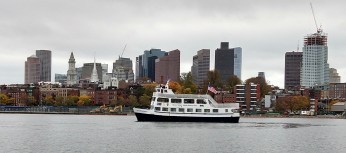
MASS BOSTON

Major cities provide tons of authentic topics for teaching, learning, and exploration.  Why did a city end up where it did?  Boston definitely developed as a major sea port.  Were there other factors that influenced the growth of Boston?  New York City?  London?  Beijing?

What are the reasons that a city developed in a certain spot?  Water access, train lines, topography, climate, tourism, historical events…

Are those reasons changing today?  What determined the growth/decline of cities of the past?  What determines the growth/decline of cities today?  What might determine the growth/decline of cities in the future?

It would be interesting to chart/graph the growth/decline of cities in the past and present.  Maybe even adding into the chart/graph the reasons for the growth/decline…

And how about designing an authentic city for the future…

Authentic Project Ideas – Clouds versus Fog

IMG_20191027_094923346_HDR

What a gorgeous fall morning!  Couldn’t resist this picture. So, are these clouds?  Fog?  What is the difference between clouds and fog?  We had had a ton of rain the day before.  Did the wet conditions contribute to this?  Also, we live up in the mountains.  Did altitude contribute to this?

What causes clouds?  What causes fog?  Can this effect be reproduced in an experiment inside a controlled environment?  Is the composition of my photo any good?  How could I take a better photo? What makes a photo interesting. (Feedback appreciated.  I enter my photos in our county fair every summer and I love ribbons!)  Authentic jumping off point for several projects…

Authentic Project Ideas – Spinning Wheels

MASS Spinning Wheel

How do spinning wheels work?  How important were spinning wheels to people in the past? How is wool spun into yarn today?

In what children’s story is wool spun into gold?  What other children’s stories involve spinning wheels?  Write a story involving a spinning wheel.

Make a spinning wheel. Lots of authentic directions to go from the starting point of the spinning wheel.  And I am busy trying to turn the yarn I just bought into gold, I will let you know how that goes!

Scheduling Authentic Field Trips for Authentic Projects

Scan

STUDENT CREATED TELESCOPE INSPIRED BY A FIELD TRIP

When I first started teaching, field trips took place at the end of a unit of study, usually dangled out there as a reward for a successful completion of the unit.  Actually, this is how field trips were used for most of my career.

But when you look at teaching authentically, it makes much more sense to hold those field trips earlier, even at the beginning of a project.  Field trips should be used to promote questions, cause higher level thinking, and cause the student to want to explore the topic further.

Of course, an introduction to the topic should occur before the project begins.  Going in with no background information doesn’t give the student the prior knowledge needed to know what they are looking at.  That is the big judgment call – how much information do the students need to successfully navigate a field trip, without giving them so much that it stifles their own questions and curiosity.  What guidelines are the students given before the trip so that they know what to expect and what is expected of them?

I ran my most successful field trip by accident.  (Ok, most of the wonderful things I did in my career happened totally by accident!)  My school was near the NASA Goddard Space Flight Center.  Due to scheduling difficulties (NASA Goddard is always booked up for the academic year very early) we had to visit earlier in the project than I wanted to.  I also did not realize we were going to see the actual James Webb Space Telescope which was/is currently under construction.  So, we ended up going on this trip early in our space related project.  The kids had solid background knowledge about space and space exploration.  But none of us, including the teachers, knew that we were going to see the actual James Webb Space Telescope.

I can sum up the authentic learning and engagement that took place by relating what one wide-eyed teacher said to me.  He turned to me when we entered the viewing area for the telescope and said he hoped the kids were behaving because he couldn’t take his eyes off the telescope or divert his full attention from the presentation.  I looked around and saw that every child was as engaged as the teachers were.  This resulted in tons of questions, and project suggestions when we returned to school.  I don’t know if the engagement would have been as intense if we had “beat to death” information about the telescope and the fact that we were actually going to see the telescope before we went on the trip.  And we certainly would not have had all of the opportunities to explore what we saw, if we had scheduled the trip in June, as I had originally hoped to.  A totally authentic and fantastic field trip, every detail totally planned out in advanced by me. (Ummm…nope!)

By the way, the James Webb Space Telescope would be a super jumping off point for an authentic project.