Happy New Year and Thank You

IMG_20191224_130454362

As we end 2019, I want to thank everyone who follows and/or reads my blog.  You can’t imagine what this means to me, that there are people out there reading what I write, and hopefully benefitting from my experiences as an educator.

Before my retirement, I watched other teachers retire.  I watched many crying and visibly upset about leaving education.  My reaction was honestly, “You have got to be kidding me.”  I loved what I was doing, but was also overwhelmed and exhausted.  I couldn’t wait for retirement.

Well, retirement came and I was devastated!   Physically I was done.  I needed to move on and take care of myself.  But emotionally I was left adrift.  I missed the children I worked with, I missed my peers, I missed my friends.

At this point, Peggy – my principal – and I had started to work on One School’s Journey.  This became so important to me.  To tell our story about what we were doing, about what worked reaching and engaging our students.  I also started to work on my children’s books with Eyen – my former student.  These books filled a huge hole for me, giving me a new purpose.  While sometimes frustrating – formatting a book is extremely challenging – I found books to be very emotionally rewarding to work on.

At some point, friends of mine suggested I start a blog to share my authentic project ideas.  I still saw projects everywhere I looked, and the idea of sharing them was really exciting to me.  The slight problem that I had never even read a blog, and didn’t know what a blog was, and certainly had no idea how to write one, was the first obstacle to overcome.

I persevered, and The Educational Journey was born. I was thrilled when people I didn’t know started to read my blog.  When my blog hit 100 views I was ecstatic!

This year my blog passed 10,000 views.  I am overwhelmed and honestly so grateful that people are still benefitting from what I know.

I wish a wonderful New Year to all of my followers and all of those folks who visit my blog every day. That I can still make a difference in the lives of children is so huge for me.  I thank you for allowing me to continue to do this.

Happy 2020 to everyone!

Most Sincerely and With Love,

Ellie


Authentic Ways to Present Projects

Scan 6

There are infinite ways to present projects authentically.  When Peggy and I were writing One School’s Journey we tried to remember all of the ways projects had been presented in our school.  I am sure we missed some, and two years later there are probably many more we could add to our book (hence, we are starting a second edition). I have copied the list we came up with, from the back of One School’s Journey, below.  Just some ideas to see if anything clicks for your students.

Student Created:

Animation, Art, Bulletin Board, Commercial, Competition, Dance, Diorama, Film, Gallery, Geography Fair, Hall of Fame, Letter, Model, Museum, Newscast, Newspaper, Open House, Photography, Play, Poetry, Poster, Power Point Presentation, Puppet Show, Recital, Reenactment, Scrapbook, Science Fair, Simulation, Slideshow, Story Board, Story Book, Time Line, Tri-Board, Virtual Science Fair…

If you have used other ways to have students present their work, and would be ok with me adding these to my list, and next book, please contact me through this blog.  I would love to hear your authentic ideas!

Authentic Project Ideas – Reindeer

reindeer

How did the story of Santa’s reindeer start?  Are there real reindeer?  Where do you find reindeer?  Did Santa’s reindeer always include Rudolph?  Do any of the other reindeer have special stories?

Write a new story about Santa’s reindeer.  Write a poem.  Draw a picture…

Create a new authentic way (make-believe qualifies) for Santa to pull his sleigh…


Authentic Project Ideas – The Nutcracker

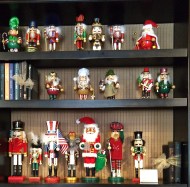
nutcracker

The Nutcracker. What is the history of the Nutcracker?  What country did the Nutcracker originate in?  How did the Nutcracker become associated with the holidays?

Design a Nutcracker.  Start a photo journal of unique Nutcrackers.  Make an authentic Nutcracker…

Most Nutcrackers are carved from wood.  What are other wooden toys?  How did toys of the past differ from toys of the present?  (Authentic projects start with one topic and frequently evolve to another topic.)

Authentic Project Ideas – Major Cities

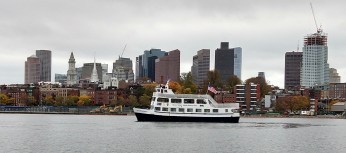
MASS BOSTON

Major cities provide tons of authentic topics for teaching, learning, and exploration.  Why did a city end up where it did?  Boston definitely developed as a major sea port.  Were there other factors that influenced the growth of Boston?  New York City?  London?  Beijing?

What are the reasons that a city developed in a certain spot?  Water access, train lines, topography, climate, tourism, historical events…

Are those reasons changing today?  What determined the growth/decline of cities of the past?  What determines the growth/decline of cities today?  What might determine the growth/decline of cities in the future?

It would be interesting to chart/graph the growth/decline of cities in the past and present.  Maybe even adding into the chart/graph the reasons for the growth/decline…

And how about designing an authentic city for the future…

One School’s Journey Places First in Educational Books – Royal Dragonfly Book Contest

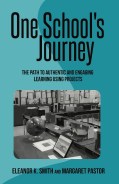
5.5x8.5 Final Cover

One School’s Journey has placed first in Educational Books in the 2019 Royal Dragonfly Book Awards Competition.  Peggy and I are so proud of this book and thankful for all of the positive feedback!

Available from Amazon:  Free on Kindle Unlimited, or on Kindle and in Paperback

Authentic Project Ideas – Clouds versus Fog

IMG_20191027_094923346_HDR

What a gorgeous fall morning!  Couldn’t resist this picture. So, are these clouds?  Fog?  What is the difference between clouds and fog?  We had had a ton of rain the day before.  Did the wet conditions contribute to this?  Also, we live up in the mountains.  Did altitude contribute to this?

What causes clouds?  What causes fog?  Can this effect be reproduced in an experiment inside a controlled environment?  Is the composition of my photo any good?  How could I take a better photo? What makes a photo interesting. (Feedback appreciated.  I enter my photos in our county fair every summer and I love ribbons!)  Authentic jumping off point for several projects…

Authentic Project Ideas – Spinning Wheels

MASS Spinning Wheel

How do spinning wheels work?  How important were spinning wheels to people in the past? How is wool spun into yarn today?

In what children’s story is wool spun into gold?  What other children’s stories involve spinning wheels?  Write a story involving a spinning wheel.

Make a spinning wheel. Lots of authentic directions to go from the starting point of the spinning wheel.  And I am busy trying to turn the yarn I just bought into gold, I will let you know how that goes!

Scheduling Authentic Field Trips for Authentic Projects

Scan

STUDENT CREATED TELESCOPE INSPIRED BY A FIELD TRIP

When I first started teaching, field trips took place at the end of a unit of study, usually dangled out there as a reward for a successful completion of the unit.  Actually, this is how field trips were used for most of my career.

But when you look at teaching authentically, it makes much more sense to hold those field trips earlier, even at the beginning of a project.  Field trips should be used to promote questions, cause higher level thinking, and cause the student to want to explore the topic further.

Of course, an introduction to the topic should occur before the project begins.  Going in with no background information doesn’t give the student the prior knowledge needed to know what they are looking at.  That is the big judgment call – how much information do the students need to successfully navigate a field trip, without giving them so much that it stifles their own questions and curiosity.  What guidelines are the students given before the trip so that they know what to expect and what is expected of them?

I ran my most successful field trip by accident.  (Ok, most of the wonderful things I did in my career happened totally by accident!)  My school was near the NASA Goddard Space Flight Center.  Due to scheduling difficulties (NASA Goddard is always booked up for the academic year very early) we had to visit earlier in the project than I wanted to.  I also did not realize we were going to see the actual James Webb Space Telescope which was/is currently under construction.  So, we ended up going on this trip early in our space related project.  The kids had solid background knowledge about space and space exploration.  But none of us, including the teachers, knew that we were going to see the actual James Webb Space Telescope.

I can sum up the authentic learning and engagement that took place by relating what one wide-eyed teacher said to me.  He turned to me when we entered the viewing area for the telescope and said he hoped the kids were behaving because he couldn’t take his eyes off the telescope or divert his full attention from the presentation.  I looked around and saw that every child was as engaged as the teachers were.  This resulted in tons of questions, and project suggestions when we returned to school.  I don’t know if the engagement would have been as intense if we had “beat to death” information about the telescope and the fact that we were actually going to see the telescope before we went on the trip.  And we certainly would not have had all of the opportunities to explore what we saw, if we had scheduled the trip in June, as I had originally hoped to.  A totally authentic and fantastic field trip, every detail totally planned out in advanced by me. (Ummm…nope!)

By the way, the James Webb Space Telescope would be a super jumping off point for an authentic project.

Authentic Project Ideas – Jobs of the Past, Present, and Future

IMG_20190508_121632153

In centuries past, many (most?) jobs involved agriculture and/or production of tangible goods.  Today many (most?) jobs involve information.  What will the jobs of the future be?  Will we still have farms? (We will always need food, but will it come from farms?) Will people be needed to work on farms?  Will there still be small businesses?

What are some jobs from the past that no longer exist?  What are some jobs that exist now that are going away?

Many authentic ways that students could answer and present the above questions.  Reports, charts, graphs, posters, living history presentations…

And…students could create a resume for a future job that they would like to have.  What can they do now to authentically prepare for this job?