Authentic Project Ideas – Designing a Carousel

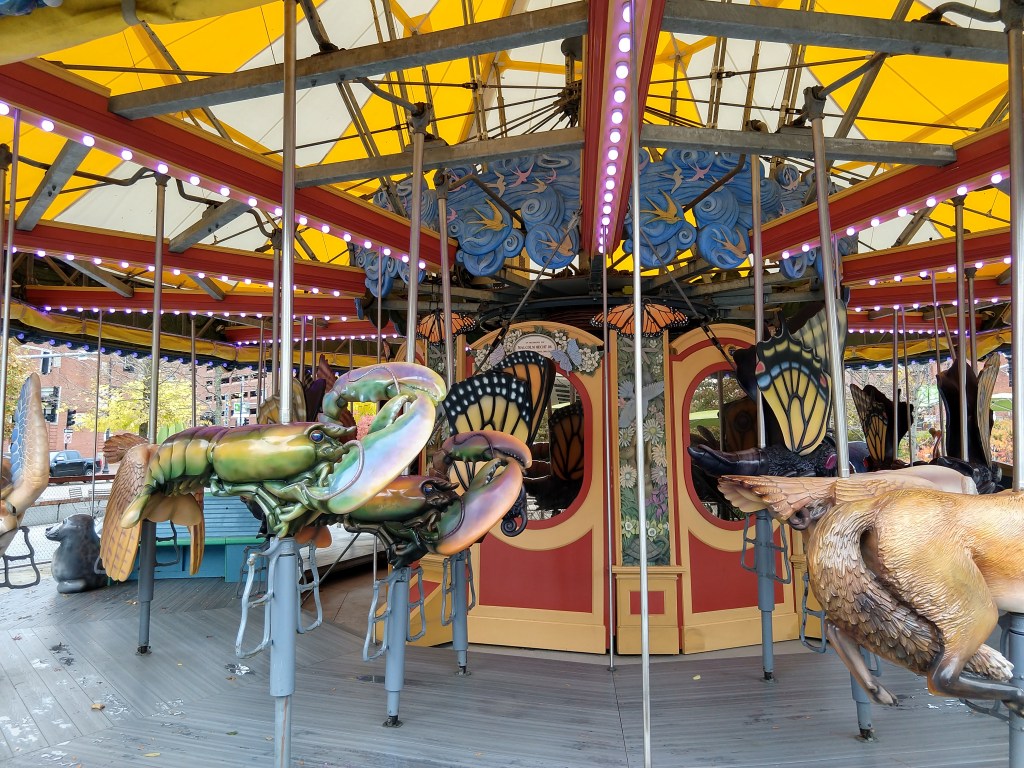
I saw this whimsical carousel in Boston.  I love the sea-life included in the carousel, so appropriate as Boston is all about seafood!

It would be a fun authentic project to design a carousel (lots of math, lots of writing) and perhaps incorporate a theme from where you live, or what you enjoy, into the carousel.  It could feature famous landmarks, favorite sports, characters from books…

Your students could even build a model of their carousel.  A working model could incorporate the authentic topics of energy and motion.

Maybe even design and build a model amusement park.  With authentic projects the sky – and beyond – is the limit.

Authentic Teaching

My daughter was taught reading in fifth grade using a very analytical program developed for above grade-level readers.  It was very researched-based.  Lots of solid educational theory behind it.  She was a voracious reader.  By the end of fifth grade she hated reading.  She hated books.  She refused to read.  (With a fantastic reading teacher in sixth grade, my daughter discovered her love of reading again, thank goodness.)

Why?  This program picked books apart.  The kids had to analyze them to death.  Every chapter was torn apart and looked at.

Think of it this way.  View a gorgeous Monet painting.  Stand several yards back and take it all in.  Breath-taking.  I fell in love with art through the work of Monet. Now, press your nose up to the canvas.  Pick it apart. Analyze the color.  Analyze the strokes.  Not so great anymore, is it?

I see the same thing happening with project based learning, what I call authentic learning.  Semantics – project based learning, authentic learning, learning through play…everything has the same goal – to make learning real, make it worthwhile, make it count.  Not only are folks hung up on the semantics, they are hung up on planning every detail out ahead of time, getting plans from others, following commercial programs – not authentic at all.

Don’t do to authentic projects what that reading program did.  Don’t pre-plan and pick apart the experience until you destroy the spontaneity and joy of learning for you and your students.  Go with the flow, as the captain of your ship keep it on course, but allow for your passengers to experience the choices from the buffet along the way!

Authentic Project Ideas – Creative Recycling

I love entering photos and crafts into our local county Grange Fair (which sadly won’t be taking place this summer due to Coronavirus).  One of my favorite categories to view is the craft category of turning something old into something useful again.  I have never entered, but it is so cool to see what people do.  Old jean shorts turned into purses, t-shirts turned into quilts, glass bottles turned into lamp bases, fronts of old greeting cards turned into new cards…

I saw this at a local restaurant and it reminded me of that category.  Simply taking old horseshoes and turning them into a menu holder on the wall. I don’t think this would be a ribbon winning entry – not overly creative – but it is certainly a really cool authentic way to recycle.

So, authentic project idea – turn something old into something useful again.  Write directions for what you are creating.  Include any needed math.  Maybe somehow turn this into a community service project – creating something to cheer someone up…lots of ways this project could go.  I would love to hear what your learners come up with!

Authentic Experiences – Mixing Batter

When you mix ingredients together for cookies or a cake, why does the batter lighten in color while you mix it?  Does this always happen when you mix ingredients together?  Why or why not? Is it important that this happens when you mix ingredients for cookies/cakes?  Will it bake better because this happens?  What happens if you don’t mix the batter enough?

What happens when you substitute ingredients?  Are there some ingredients that can be substituted and it won’t matter?  Which ingredients are very important and must be used for the recipe to work? What if you add more flour?  Less?  More sugar?  Less?  More baking soda? Less?  What is the difference between baking soda and baking powder?  Can you add too many chocolate chips? (Is there such a thing as too many chocolate chips?)

And don’t forget to talk about all of the measurements being used.

Lots of authentic questions.  Lots of authentic eating opportunities!

Authentic Project Ideas – Lemonade Stand That Makes a Difference

Summer is finally here, and kids are out of school and home for the summer. (Officially that is – most have been home for months.)  This is the time that summer lemonade and baked good stands start to appear. 

With so many people struggling to make ends meet due to the Coronavirus and the economic impact of the shutdowns, it would be a great authentic project to turn these summer stands into fundraisers for local food banks. 

An authentic project such as a lemonade stand with home-made cookies includes reading recipes, using math to make the lemonade and cookies, writing signs, more math to sell the lemonade and cookies…the authentic experiences are endless.

And it is never too early for kids to learn how good it feels to help those in need, and that every little bit helps.  It may not seem like much to donate a few dollars to a food bank, but it means the world to the family that gets food due to that donation. 

Authentic Teaching – Listening to Students

As I have stated many times, I am passionate about Authentic Learning.  It is the reason I started my blog after I retired.  I was ready to stop teaching, but not ready to leave education and something I believe in with all my heart and soul.

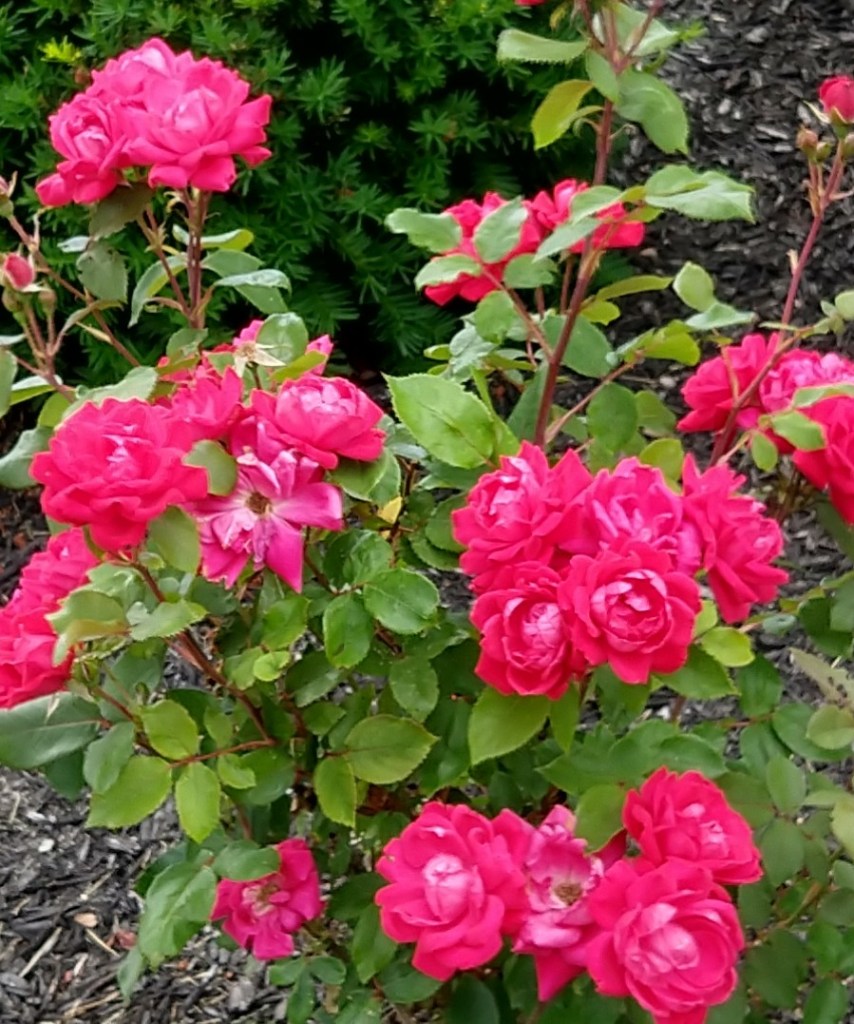
I also love photography, and realized that my photos were giving me lots of project ideas.  If you stop, look around, and smell the roses, you will be amazed and what you see. 

But for a project to be authentic you need to listen, really listen, to your students.  What are they thinking about, what do they want to know, what are they interested in.  Then you create your driving question, and start to frame your authentic project with experiences that require that your content covers your curriculum objectives.

Authentic teaching requires planning, but that planning needs to revolve and change based on what your students are interested in. Plan a lesson, watch your student engagement, listen to their interests and questions, and change course if necessary.

Teaching authentically involves giving yourself that time to reflect and smell those roses. It is so important to good teaching and much more pleasant way to go through life!

Authentic Teaching – Baking

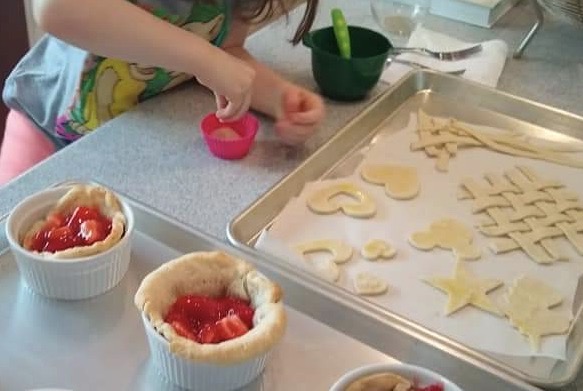
Baking is a fantastic authentic way to teach kids math.  (True confession – I still need to visualize some sort of cooking experience when I am trying to figure out fractions.)

While baking with kids, you need to talk with them about what they are doing.  Insert math language and content into the conversation. Guide them, but let them problem solve.

You can step in to stop a catastrophe – it would definitely be catastrophic to add too much salt to a cookie recipe, while adding too many chocolate chips would be a bonus!

Have fun, and please send me any good recipes for chocolate chip cookies.  We lost our favorite family recipe (absolutely catastrophic).

Authentic Project Ideas – Wood Board Games

Toys and games of the past were made out of wood.  There were so many simple, yet fun games, that were played in the past.  What were some of these games?  When and where were they created?  Who played them?

Create a new authentic board game.  Make the game board.  (Cardboard is fine if you don’t happen to be a wood carver!)  Create your own rules.  Teach the game to your friends.

And if it is a game that can be played over Zoom, if you make one and send it to your friends as well – even better!

Stay Safe!

Managing Authentic Learning

In response to one of my posts, several people asked some great questions.  How do you manage students going off in different directions with their authentic projects?  How do you meet your objectives?

Several people responded with great answers.  I am adding my thoughts and paraphrasing what was said. (Thank you to everyone who answered these questions, both on Facebook and on my blog.)

What we found when we had students going off in several directions with authentic projects was that we were able to group them into smaller groups based on their interests.  Some groups were larger, some were small, and some students really wanted to work alone, which was fine.  But I don’t remember a time that we were managing more than a handful of groups, which honestly is not that hard to do when kids are engaged and motivated.

To meet objectives, make authentic project milestones require that your content covers your objectives. For example, if you students are designing and building model cars, and you have an objective to cover motion, friction, and energy, then have a project milestone be to race the cars and insert a discussion of motion, friction, and energy into the follow-up of the race.

Managing authentic projects is work, but it is also a lot of fun, different every day, and never boring.  The kids are engaged, and so are the teachers.  Can’t beat that!

Authentic Project Ideas – Designing a Ferris Wheel

This was a small, simple Ferris Wheel that I saw at a carnival last summer.  It actually looked kind of sad to me – it definitely needed a tad more creativity in the design. Perhaps a theme, a little decoration, something…

Which got me thinking about designing a Ferris Wheel.  Students could add creative carriages, etc.  And for older students there is the engineering behind Ferris Wheels.  The history of Ferris Wheels, famous Ferris Wheels…

And always remember that this is just the starting point.  If a student ends up doing research on the clouds seen from the top of the Ferris Wheel – that’s an authentic project!

*We were in London about a decade ago with our children and didn’t ride the London Eye because it was expensive. We are still kicking ourselves!