Authentic Learning Turning Into an Authentic Project

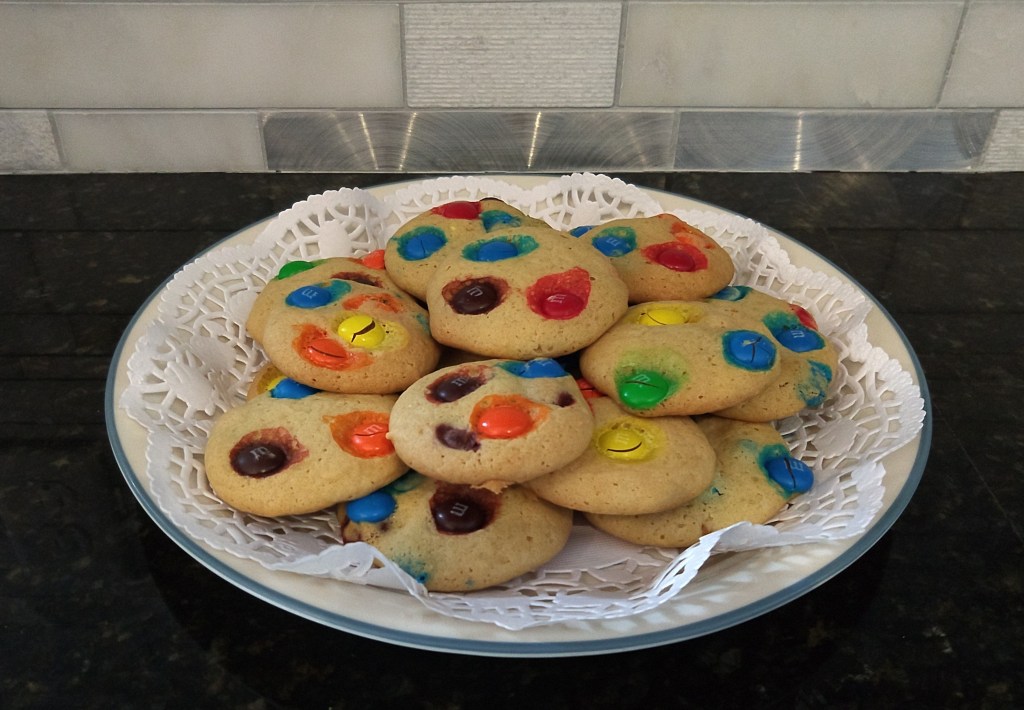
I finally learned how to bake cookies.  Seriously!  I have never been able to bake cookies – my result was always a melted, burnt mess.  But thanks to a lot of instruction and patience from my daughter-in-law, I have finally mastered baking cookies.

So, for the first time, I am going to make holiday cookies this year.  I am going to use the recipes I have already mastered and change them slightly for the holidays.  For example, using red and green M&Ms only for my M&M cookies.  I am also thinking about how to tweak my chocolate chip cookies for the holidays.  Any ideas?

I have written about baking and cooking many times on my blog.  This is one of the best authentic ways to teach so many math and reading skills.

With the current pandemic, I was also thinking about authentic social awareness skills.  There are many single people in my neighborhood who have been isolating alone now for months.  I am thinking about leaving a plate of holiday cookies on several doorsteps.  I thought about doing this anonymously, but with food I think it is better that the receiver knows where the treats came from.

Doing this with children could easily turn into an authentic project.  Baking is just the starting point. Conversation while baking could turn into a project of making and leaving home made ornaments on doorsteps to brighten people’s holiday.  Or maybe making a small homemade gift. 

Perhaps this could turn into an authentic project learning about all the holidays people celebrate this time of year, and what gifts are usually given, if any, for these holidays. I would love to receive a gift from another religion/culture with a written explanation of what this gift represents. 

So, I started writing about my new-found ability to bake cookies, and am now thinking about leaving some unique gifts from other religions/cultures on my neighbors’ doorsteps, with an explanation about what the gifts represent. I need to do some research and planning. I will need to do some writing. And I am going to need to be creative. This is an authentic project!

Authentic Teaching – Including Educational Objectives

Parents frequently have the opportunity to just explore with their children.  Just spending time looking, listening, talking…  And this is when children really learn.  When the exchange is spontaneous, real, authentic

Authentic learning is just that.  It is spontaneous and real.  The only difference is that the educator also has objectives and goals that need to be woven in. 

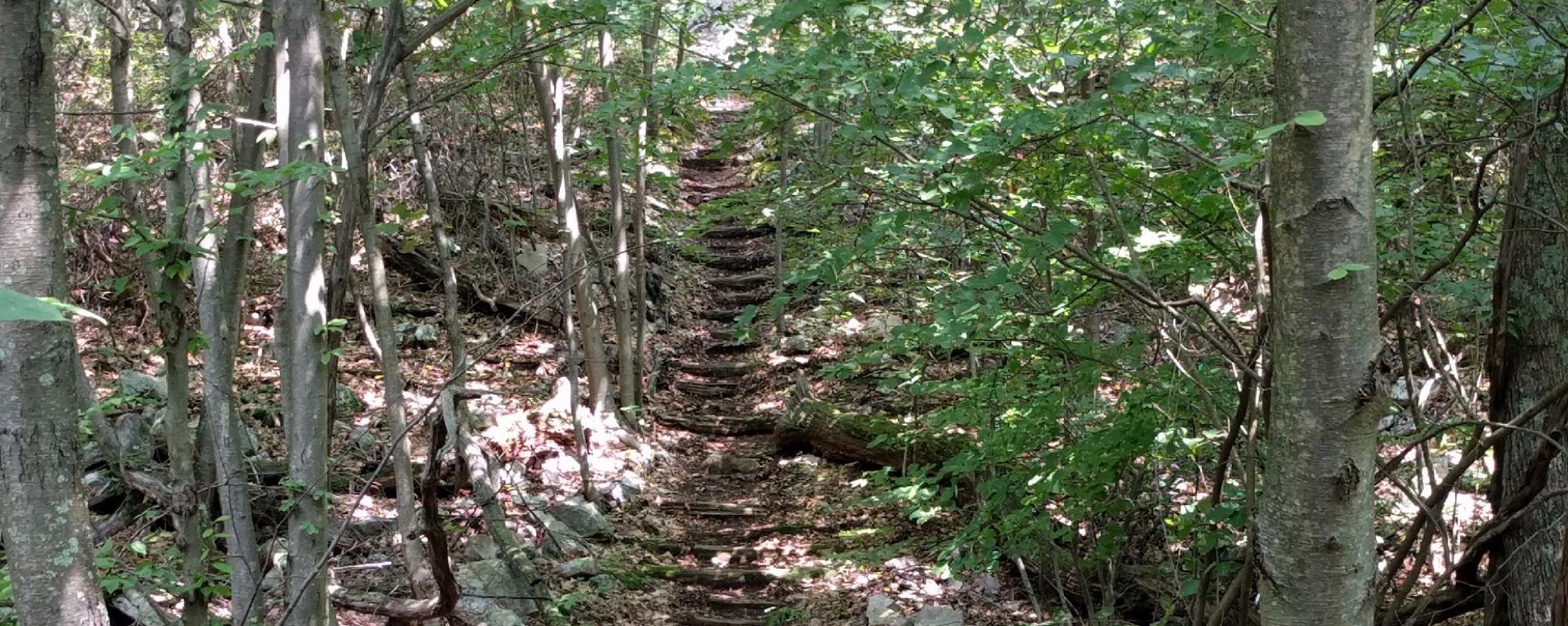
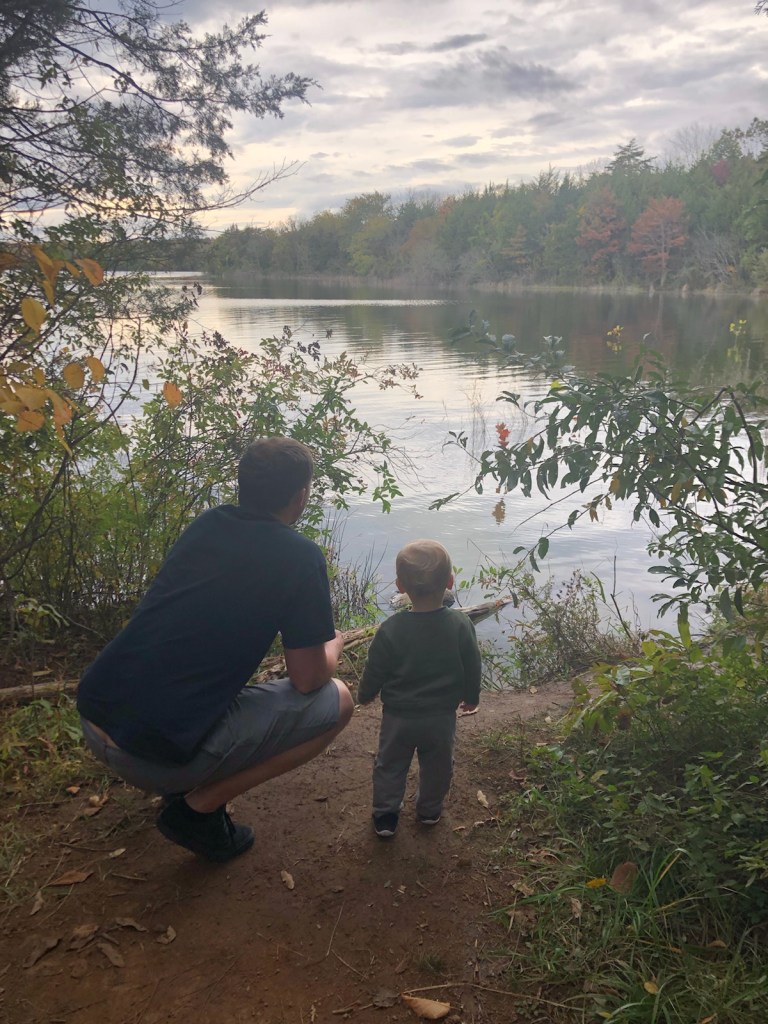
Here is the difference.  The father gets up in the morning and decides to take his young son on a hike.  While on the hike they discover a lake.  The father and son enjoy the view, and the father also talks to his son about what they are seeing.  Lots of authentic learning is taking place.

Now, picture the father as an educator (and aren’t all parents educators).  He gets up in the morning, looks at his plan book, and sees he wants to introduce the concept of “lake” to his young learner.  So, he plans a hike that ends at a lake.  Here is the big difference. The father went on a hike and happened to end up at a lake. The educator plans a hike that ends up at a lake.

Once they get there, the educator lets his young learner take everything in, and also introduces the concept of “lake.”  And if there is not a lake nearby to explore, he plans a field trip.  Or he finds a video on line that explores a lake. (Authentic can be virtual as well…)

Oh…and in the first scenario, the mom left at home enjoyed some quality nap time!

Authentic Project Ideas – Domestic vs Wild Animals

What is the difference between a domestic and a wild animal?  Your learners may be surprised once you dig into this a little.  I had assumed that domestic animals were simply those that were pets – cats and dogs.  

But it turns out it is not that simple.  I found this out when I wanted to enter a wonderful photo I had of alpacas into the wild animal category for a photo contest.  A friend told me that was the wrong category for this photo.  Alpacas are domestic animals. Once I started to do research I was really surprised at what is considered a domestic animal. I really didn’t understand what the term domestic meant.  It is also fascinating to find out when an animal was domesticated.  Dogs – 30,000 years ago!

Lots of authentic projects here.  Starting to research this topic could easily move into an authentic project about pretty much any animal out there.  Gotta go, time to feed my pet alpacas.

Authentic Teaching – Engaging Your Learners

If your goal as an educator is to engage your learners, then authentic teaching is what you want to do. It works.  Why?  Because your learners get to explore what interests them, within the constructs of your objectives and goals.  I’ve used the analogy before, they are in the driver’s seat, but you are navigating.  Or maybe you are in the driver’s seat, but they are navigating.  I think it goes back and forth actually. But the bottom line is that they are exploring topics of interest to them, while you are meeting your own objectives and goals.

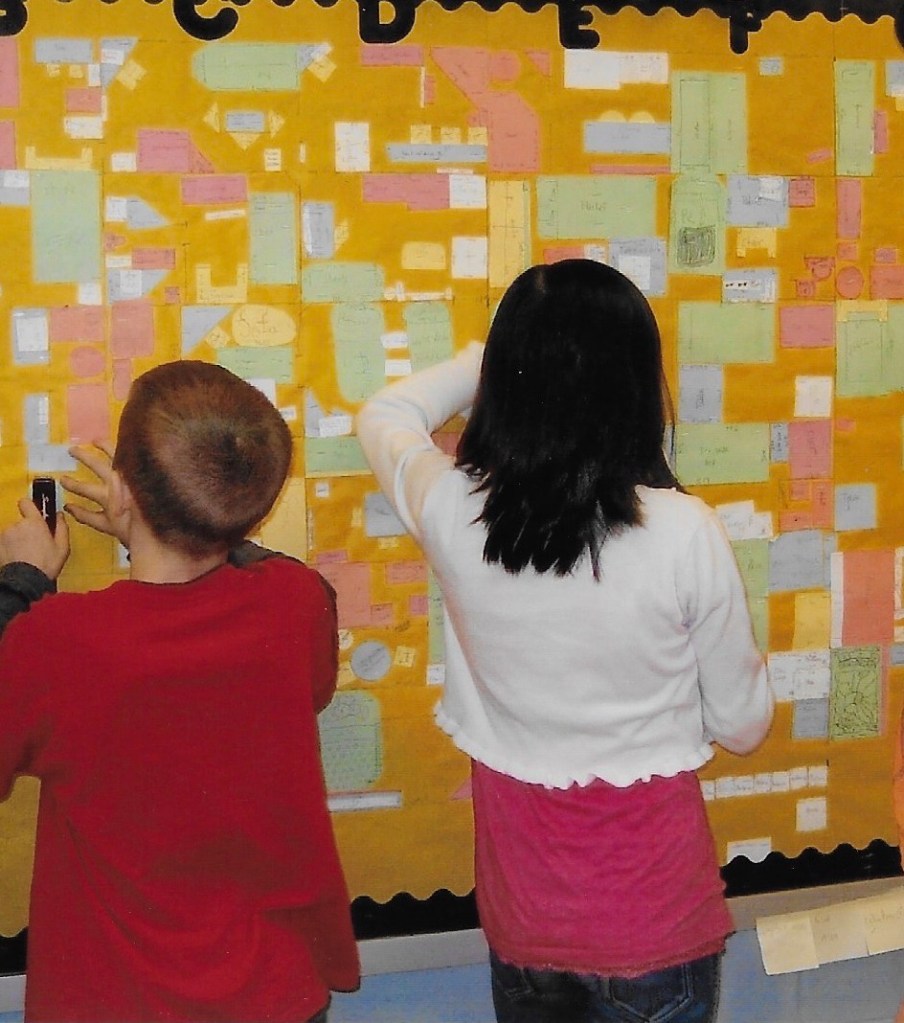
The photo above is from the Martian Colony Project that I was very involved with.  These fifth-graders came in from recess to work on the colony board.  The board was a great vehicle to teach many math skills – perimeter, area, scale, map grids…  But the students were also reading (research about Mars and everything else they wanted to incorporate into the colony), writing (writing about their colony plans), working with science, social studies…

And they were able to easily explore their own interests within the colony.  The colony had sports teams, a spa, snack bars, health clinics…you name it and the colony had it. 

So, substitute a project designing a new office building, a sports complex, a university, an airport…the authentic list is endless. 

Authentic Teaching – Horses to Football

Working on a recent blog about project ideas for horses, I was thinking that really this blog could be about any animal.  Which got me thinking that any of my blogs could be about something similar…or not similar.  That is what authentic teaching and learning is all about.

The point of authentic learning is to present an idea, and see where your learners take you.  You are still in the driver’s seat, but you are allowing your learners to navigate how you get there.  As long as you get there, that is the point.

So, if your goal is to learn about animal habitats, and you suggest an authentic project about horses, and your learner(s) are more interested in dogs, or cats, or snakes (yuck), then that is fine.  And if your learners are only interested in football…and they want to read about football and write about football…the history of football, create a timeline about the sport, design a football stadium.  Start pulling in all of your goals into football. 

So, we started with horses and now we are on football.  Back to animal habitats…how many stadiums are home to wild animals? What kinds of animals?  How did they get there? Has a wild animal ever interrupted a game?  What happened?  That is authentic teaching and learning.

Authentic Project Ideas – Horses

Kids love horses!  The authentic projects that could be done about horses are endless. Actually, the authentic projects that can be done on any topic are endless…

The history of horses.  Where did horses originally come from?  How have horses been used in the past?  How are horses used today?  What are the different kinds of horses?  What is the difference between a horse and a pony? Are zebras a type of horse? Do you find different kinds of horses in different places?  What are the most valuable horses?

Create a book about horses.  Create a chart about the different kinds of horses.  Diorama, slide show, poster, photo journal… 

For older learners this could go the route of learning about agencies that help horses being mistreated.  Perhaps setting up a fundraiser to support their cause.

Giddy Up! 

Authentic Project Ideas – Cliff Divers

Put this under the project idea category of “you have got to be kidding me!” This is what these folks do for a job.  They dive off of cliffs.  I have never been so glad that I earned my living as a teacher!

This photo was taken in Acapulco.  Our guide told us that none of the divers have ever been seriously injured.  They start out as children and learn to dive off of the lowest rocks and gradually move up. My daughter was a competitive gymnast and it was fascinating to watch how gymnasts learned new skills.  It took years to develop some skills and by the time they were doing them on different apparatus they were so well trained for so long, you really didn’t worry about them getting hurt. 

Still, watching the divers, I held my breath!

So how long does it take for a diver to master the highest cliffs?  Are there cliff divers in other places?  What is the history of the Acapulco cliff divers? (Research, time line, report, display, Power Point…)

Do they use math when they dive?  How?  Could computers be used to make their dives even safer?  How? How are computers used in other sports to improve achievement and safety?

While I really push the idea of authenticity, please don’t authentically dive off of a cliff to research this topic!

Authentic Project Ideas – Waves

If you look closely in the above picture you can see a lot of surfers waiting to catch waves.  It didn’t look like a great place to catch waves to me, but right after I took the photo, many of them caught a wave. (Of course, I missed that picture!)

So what do surfers know about waves that makes them able to predict where and when a good wave will show up?  What makes waves?  Where are the best waves in the world for surfing?

And if this project turns into a project about where the best beaches are in the world for catching fish, or the best beaches in the world for getting a great tan – that is authentic learning!

Authentically Teaching All Subjects

I had an idea to refine my blog by adding more topics to my menu, breaking down my ideas into reading, writing, math, science, and social studies. As I started to look at my entries, I realized that if I did this I would be moving away from exactly what I am trying to promote – teaching authentically.

If you are teaching authentically, then you are not teaching in isolation. If you are authentically teaching math, it should involve research/reading. If you are authentically teaching reading, it should involve social studies, science, and math. Writing should be authentically incorporated into every subject, it should not be an exercise unto itself.

So I am going to leave all of my ideas for authentic projects under one topic. It really shouldn’t make it more difficult to find an idea, as the whole point of my blog is to give you lots of ideas to think about and see if one resonates for you and your students. Need to teach area – design a dream house, measure for carpet, plan a new park, figure out how many chocolate chip cookies can fit on a cookie sheet… (And send me the recipe please – still looking for a great chocolate chip cookie recipe!)

Authentic Teaching – Listening to Students

As I have stated many times, I am passionate about Authentic Learning.  It is the reason I started my blog after I retired.  I was ready to stop teaching, but not ready to leave education and something I believe in with all my heart and soul.

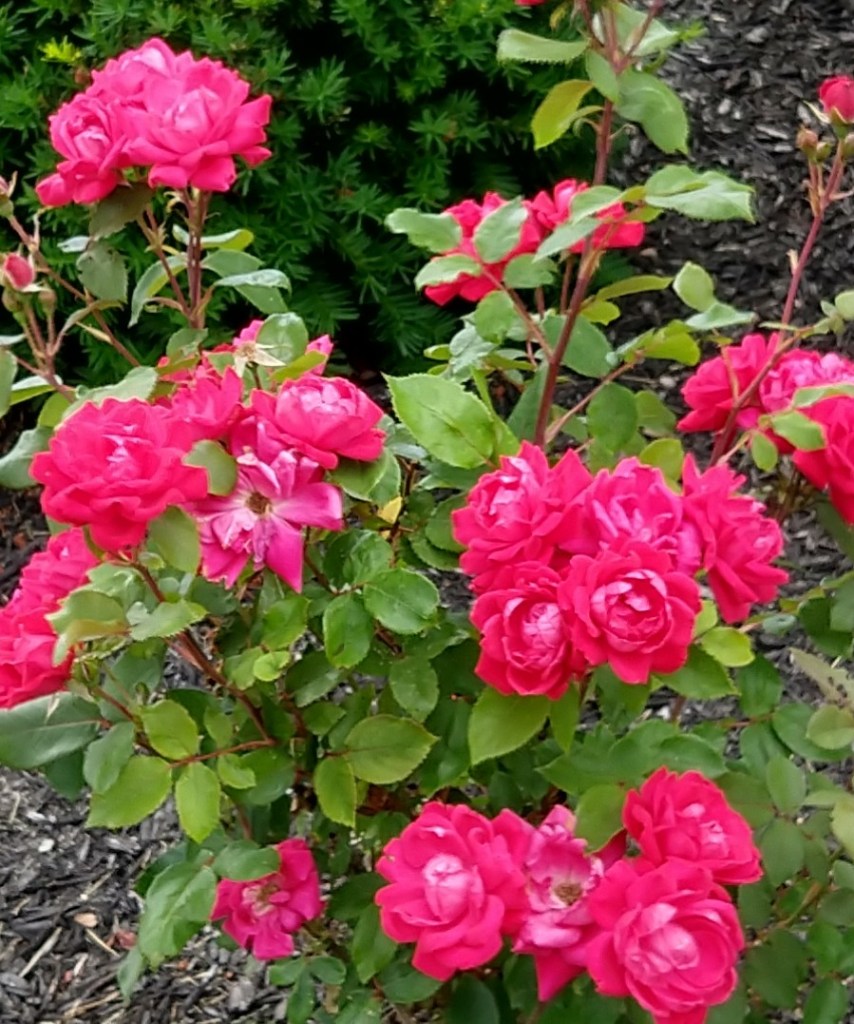
I also love photography, and realized that my photos were giving me lots of project ideas.  If you stop, look around, and smell the roses, you will be amazed and what you see. 

But for a project to be authentic you need to listen, really listen, to your students.  What are they thinking about, what do they want to know, what are they interested in.  Then you create your driving question, and start to frame your authentic project with experiences that require that your content covers your curriculum objectives.

Authentic teaching requires planning, but that planning needs to revolve and change based on what your students are interested in. Plan a lesson, watch your student engagement, listen to their interests and questions, and change course if necessary.

Teaching authentically involves giving yourself that time to reflect and smell those roses. It is so important to good teaching and much more pleasant way to go through life!