Authentic Project Ideas – Waterslides

waterslide

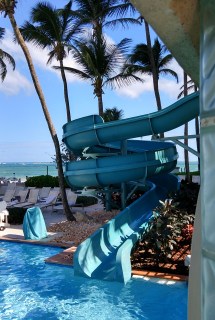
Watching kids tear down waterslides, I started to think about all the features that need to get designed into the slide to make it fun and safe. This would be a  great authentic project for older students to do, research about waterslide engineering and designing a waterslide.  Younger students could focus on fun designs.  Waterslide models could also be built.  Lots of authentic math and reading opportunities!

*Don’t get me started about the waterslides hanging off the sides of cruise ships.  How do you spell CRAZY!

Authentic Project Ideas – Waves

waves

What causes the waves in the oceans?  Why are waves bigger on some coastlines than on others?  Where are the best places to surf?  Lots of questions, lots of research, many possible currents to follow (waves…currents…get it!)  Hmm…what causes ocean currents?

Authentic projects often start with a simple question, lead to research, and end in models or experiments.

Authentic Project Ideas – Clouds

clouds3

How do clouds form?  What are the different types of clouds? What do clouds tell us about approaching weather systems?

Can you get one type of cloud on top of another type of cloud?  Yes, you can!  I  was in an airplane when I started thinking about clouds and I saw one type of cloud layered on top of another type of cloud. Or maybe that was just one type of cloud?  Off to do some authentic research myself!

Maybe I’ll start to photograph and label all of the different types of clouds I can find and what they mean…

Authentic Teaching Opportunities – Project Presentations, and more…

state fair 1

Adults often do many things for children that they can do for themselves, especially when preparing for a project.  We all know how important it is to be prepared for a lesson with students.  But being prepared, and adults doing work that students can learn from, are two very different things.  Planning and gathering materials for a project are important activities that students can and should be involved with.  When plans miraculously happen, and materials just appear, many learning opportunities are lost.

When we presented the State Fair to other groups of students, many math opportunities occurred.  There was measurement to plan how to set up the fair in the space we had available.  There was discourse and compromise among students to agree on how to place each state in the fair – Alaska wanted to display the states alphabetically, Texas by size, California by population…   A schedule was developed – after the students figured out how much time each group would need at the fair based on number of displays to visit and how much average time would be spent at each display.  Groups were invited based on this schedule.  Then the schedule was adjusted for groups that had a conflict with the available times.  Then the schedule was re-adjusted after the first day when the students realized larger groups and older students needed more time at the fair than smaller and younger groups, etc.

There are many math opportunities for parents working with children at home as well.  When inviting other children over make sure your child is involved in this discourse.  You would be surprised how much math you use every day without even realizing it.   (Except of course when I balance my checkbook.  Then I totally realize how much math is involved as I try to make sense of the usual mess I have made!)

Authentic Project Ideas – Airplane Engines

Engine

How do airplane engines work?  What is the difference between how propellers work and how jet engines work?  Some airplanes have hybrid propellers/jet engines, how do those work?

Authentic projects often start with a simple question, lead to research, and end with a student construction of a 747 (if you are lucky, it will just be a model).

The State Fair Project – Teaching Math

State Fair 2

When we developed The State Fair Project in fourth grade there were countless opportunities to use math.  During the year we were constantly looking at statistics for each state.  Size, population, socio-economic make-up, average temperature, significant dates…  All of these numbers were looked at and discussed.  The numbers were used not only to compare and contrast the 50 states but to develop some cause and effect hypotheses.

If the average temperature of a state was warmer than most, how would this effect the size of the population.  How about the average age of the population?  Why would older people tend to live in a warmer climate? Why would more Olympic skiers grow up in specific states?  But, why were there Olympic figure skaters training in Florida?

Every statistic became a jumping off point for further discussion and research.  Questions created more questions.  The use of math was constant, fluid, and authentic. (And of course, reading and writing skills were strengthened as well.)

*This authentic project can be easily adapted for territories, counties…whatever system the country you are studying uses.

Authentic Project Ideas – Ships

IMG_20180812_194911 copyLooking down off of a moving cruise ship – the pilot has just jumped off and is being helped by a crew member on the pilot boat.

I was recently talking about how amazing big ships are – how those gigantic machines can be so carefully maneuvered.  The person I was chatting with didn’t realize that pilots hopped on and off moving ships to bring them into and out of ports.  I knew a lot about ship pilots because one happened to live in my mother’s apartment building in Fort Lauderdale.

Several ways an authentic project about ships could go, and probably many more depending on student interest.  How do these large ships work?  What are the mechanics and technology on a ship? What are all of the jobs that people have who work on ships? (That is a long and fascinating list, including the pilot mentioned above.)  All of these questions have different answers depending on the type of ship the student is interested in – Cruise Ship, Merchant Ship, Naval Ship…

Plan a trip, design a better ship, plan a career…

Bon Voyage!


Real Authentic Learning

IMG_chocolate chips

Doing projects with kids is a great starting point for learning.  But the goal should be for the authentic learning experience.

Following directions for an arts and crafts project, or following a recipe, is definitely great practice using reading and math.  However, if it stops there, the opportunity for real authentic learning is lost.  I don’t think we can state often enough that we are raising children to function in a world that we can’t possibly imagine.  Many of the jobs they will hold in the future don’t exist yet.  And more importantly, many of the jobs people hold today, will not exist in the future.  The children we are educating today need to be able to think outside the box if they are going to have a chance to really succeed in the world they will live in as adults.  Simply following directions to get from Point A to Point B, or repetitive drills filling in correct answers on a worksheet, is not going to prepare them for the future.

Following a recipe, or a set of instructions, should just be the starting point.  The real authentic learning occurs when adults listen to what children are saying while they are working, and follow up on this discourse.  Why just one cup of chocolate chips?  What would happen if we used two cups?  Do generic chocolate chips really taste the same as the more expensive Nestle brand?  Can you taste the difference in the finished product?  How can we test this?…

Sometimes adult prompting is needed to take the project to the authentic level.  But often, just listening to children, really listening, provides the springboard to that authentic learning experience.

The Real Spirit of the Holidays – Teaching Children About Giving

IMG_20180923_123053

The holiday season is upon us.  (OK, I know it is early November, but the trees are going up in the stores, and the Hallmark Channel is starting with the holiday specials.)  The holiday season always reminds me of the amazing way my mother handled a situation with me when I was 12 years old.

My great-grandfather stopped by in early December to drop off his holiday gifts.  I don’t remember what my brothers received, but I do remember what I received.  Avon Face Powder.  Now, I am not bashing Avon or face powder, but I was 12.  My great-grandfather was in his 90s at the time, so this probably made sense to him that a preteen girl would want something that was considered elegant and extravagant, in his day.

I was polite and thanked him, but after he left I started to cry.  My mother could have slipped into a “you are ungrateful, he is 90-year-old man” sermon.  Instead she non-judgmentally stated that she knew I was disappointed, but that there might be a family in need where the mother would appreciate the gift.

My mother then spent the next few hours on the phone finding an agency that would accept the face powder.  (This was before the internet, and was surprisingly difficult to find an agency that accepted gifts for families in need.)  My mother was a single parent with three children.  You really couldn’t have blamed her if she took the easy way out, told me to be grateful, or replaced the gift with something else.  Instead we ended up “adopting” a family for the holidays.  We went out, as a family, and purchased gifts for everyone in that family, wrapped them (including the face powder and some additional make-up for the mom), and delivered them to the agency.

This became a yearly tradition, something we did every holiday season.  To this day I can’t imagine the holidays without donating to Toys for Tots or adopting a family from the tree at the Y or the mall.  And that Avon Face Powder represents one of the best holiday gifts I ever received.

Authentic Project Ideas – Fall Foliage

IMG_fallleaves

I woke up this morning to some really beautiful red leaves in our neighborhood.  While out and about, people were commenting on how gorgeous the leaves finally were.  I had been aware that this fall we had not had the usual amount of gorgeous leaves, but really had not paid much attention to why.  My knowledge of fall foliage is basically that the weather gets colder, the leaves change colors, and then they fall off the trees.

Listening to those around me discuss the late arrival of the fall colors this year, most people were talking about the amount of rain we had this past summer and how that delayed the fall colors.  We had had a very wet summer – ok that is an understatement.  We had a “build an ark and get ready for the flood” summer.  Every day.  It rained.  Poured.  I have never ended a summer so pale!

So, was all the rain what delayed the fall colors?  What causes leaves to change colors?  Why are some red, some yellow, some orange…?  I can think of authentic projects from the PreK level (collecting leaves, labeling colors, identifying tree type) to the high school level (scientific explanations for all of my above questions).

This could lead to authentic projects about evergreen versus deciduous trees, the arctic tree line, tree disease…  There are endless possibilities as to where this authentic project could lead based on student interest and discourse (as is the case with all authentic projects)!

Signing off now….wait…what about understanding how scientists predict when the peak of fall colors will be every year.  Planning a trip to see fall colors.  Where should I go?  When?  What hotels should I stay in?  What is my budget for this trip?

OK…really ending this blog entry now…Hmm…How do those jewelers make those gorgeous pendants of leaves dipped in gold?…Why do the leaves turn colors on the trees at the bottom of our local mountains, before the top trees turn?  Isn’t it colder at the top of the mountain?  Don’t the trees in colder temperatures lose their leaves first?

If it is real and authentic, the project possibilities are endless!