
Authentic Project Ideas – Fences

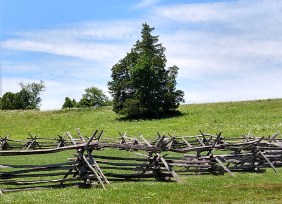
SplitRailFence

Driving along a country road in Virginia, I ran across a beautiful split rail fence.  It was part of the fencing around a Civil War battlefield.  I started to think about these split rail fences, and the reasons why fences were constructed that way in centuries past.  Then I started to think about modern fences, some that are really beautiful and fit in with the landscape, and some really ugly fences.

An authentic project might be to research the history of fences.  How about a catalog of all of the ways fences have been, and are currently built. Or maybe, how the local environment impacts what materials are used in fences.  (Years ago, I saw wonderful playgrounds in Iceland that were carved into the lava flows, the surrounding lava becoming the “fence.”)  How about what fences are popular today and why?

A fantastic authentic project might be to design a modern, affordable, environmentally friendly fence that is not ugly!  Perhaps this might lead to a future venture/business into actual fence design and production!

Fences are used to keep dogs in yards.  There are many interesting breeds of dogs.  Do different breeds require different types of fences (material/height)? Remember – authentic learning means that a student’s passion may change the direction of the project.  If talking about fences leads to an in depth project about dog shows and how fencing and enclosures are used at these shows – that IS authentic learning!


Authentic Project Ideas – What Was This?

IMG_20190418_125054834_HDR

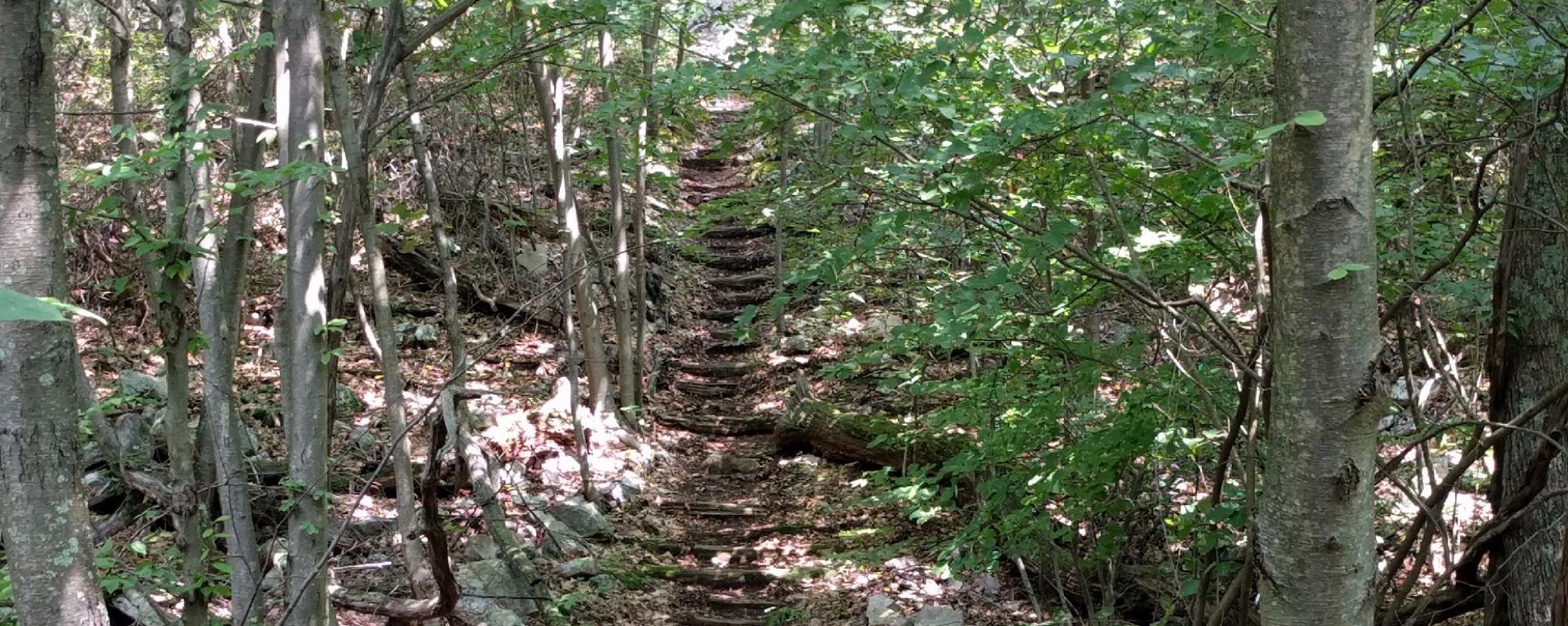
One photograph can be the jumping off point for an authentic project. What was this?  Who built it?  When? Why?  What happened to it? (history/research – reading)

Where was this photo taken? (geography) What clues are in the photo to help you figure this out? (botany/geology)

Design and build a model of what you think this structure was. (math)  Creative writing story starter? (writing)…

Authentic Teaching – Teaching Outside the Box

IMG_20180513_054644 G

I had an opportunity a few years ago to visit the Falkirk Wheel in Scotland.  I knew that this was some sort of structure that raised and lowered boats, sort of like a lock does.  However, I really couldn’t picture it and was totally surprised when our tour arrived at the Wheel.  It was nothing like what I imagined.

To me, this structure truly represents why authentic teaching and learning is so important.  The Falkirk Wheel is totally different from traditional locks.  This represents true “outside of the box” thinking.

We are heading into a future that we can’t even imagine.  Educating children in the traditional way of “one correct answer, one way to accomplish your goal, color inside the lines using the correct color, stay inside the box” is not going to prepare them for the future.  The jobs that many of our children will hold don’t even exist yet.  And many of the jobs people hold now, will not exist in the future.

Authentic teaching prepares students for this future world.  Make it real.  Make it count.

*And riding in a boat that was raised by the Falkirk Wheel was really cool!

Authentic Project Ideas – Umbrellas

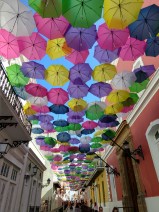
Umbrellas2PR

What is the history of the umbrella?  When was the umbrella invented?  What have umbrellas been used for? (Umbrellas are being used in a very creative way in the above photograph.)

Authentic Research – You might be surprised at the lengthy history of the umbrella.

Authentic Project – Maybe a student can design a better umbrella.  Or create a beautiful umbrella.  Develop a timeline for the history of the umbrella.  Or maybe the above photograph is an inspiration for a creative writing project.

Or – what causes rain?  Remember in authentic learning students often end up exploring a related/different topic inspired by the original topic.  Umbrellas shield a person from rain, so what causes rain?  What causes a drought?  Can we make it rain?  What happens when there is a rain delay in a baseball game?…

Authentic Geography – If you want to know where this picture was taken, contact me through my blog, I will be happy to give you some clues!

Authentic Project Ideas – Building a Bird Feeder

Birds

There are so many authentic projects that can be inspired by bird feeders.  Do different kinds of birds need different kinds of feeders? Do different kinds of birds eat different kinds of bird food?  Once you start feeding birds it is important to not stop.  Why?  How about designing and building a bird feeder?  (Research/reading, writing, math, science…)

In my neighborhood we have a huge problem with bears feeding from the bird feeders.  To the point that we have been asked to not put out bird feeders.

So maybe a great authentic project would be to design a bear-proof bird feeder.  Let me know what you come up with –  I would love to be able to put up a bird feeder in my backyard!


Authentic Teaching – Same Inspiration, Different Projects

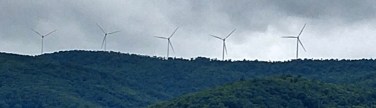
Windmills

On a road trip recently, my husband and I passed a mountain range covered with wind turbines.  They were actually quite beautiful and engaging to watch.  I stopped to photograph them and started to think about all of the different authentic projects they could inspire.  Building a model demonstrating how wind turbines work. Exploring other sources of unlimited energy.  Learning about some of the problems with the turbines.  Proposing solutions for these problems. Controversies?  Other sources of unlimited energy…  Sources of limited energy…

I then remembered a beautiful quilt that a friend of mine had made of wind turbines.  Yes, it is an unusual quilt, she does unusual work!  So, the wind turbines inspired her to create a work of art.  Which then led to other quilts showing different sources of energy, and her most unusual quilt to date, toxic waste drums – it is an absolutely gorgeous and unique quilt.

We have always allowed adults to take a topic and run with it.  Not only in art, but in science, math, business…  Actually, this is encouraged in places that value creative thinking.  Shouldn’t educators be encouraging the same thing?

We are educating children for jobs that don’t even exist yet.  They will work in environments, doing jobs, that we probably can’t even imagine.  Ingenuity and creative thinking will be mandatory for them to prosper.  So, shouldn’t we be not only letting children, but encouraging them to look at something and explore it in a way that is meaningful to them.  Look at a question or a problem, and then tackle it with as much creativity, and divergent thinking as they possibly can?  Take the road less traveled.  Diverge, create, branch off, discover, explore…Authentic Learning.

WindMillsEnergy copyQuilt by Chris Staver

Authentic Teaching – Budgeting for Materials for Projects

IMG_20190622_094540276

While students should be encouraged to find what they need for projects, focusing on creativity, using recyclables etc, sometimes something is needed that has to be purchased.  There are so many authentic lessons that can be included in this process.  Giving students a budget to work with is not only a great way to use and reinforce math, it also makes students aware of what they are spending, what they really need, and creative ways to get what they need.

When building dioramas, several fourth graders were adamant that they needed modeling clay.  We approached this by telling them that the teachers were willing to put up $10 to buy clay.  $10 for the entire class.  The students searched on line and realized that even finding the best price, that was not a lot of clay for 30 students.  After some discussion and problem solving, the kids decided to make their own clay. They still needed to buy materials to make clay, but the $10 provided by teachers was more than enough to get the materials they needed.

The authentic experience even moved into the science of color mixing as they bought food coloring to dye the clay the colors they needed. And it also moved into the authentic discussion of, and research about, what was the best laundry detergent to try to get red food coloring out of my white skirt.  Sigh…

Museums as a Resource – You Just Never Know What Might Inspire a Project

autopapertowel

As I mentioned in another blog, typically we take students on an end-of-unit field trip to see what we just finished learning about.  However, places like museums are really a fantastic jumping off point for the start of a project. (Field trips in general are fantastic starting points for projects.)  The students certainly need some framework before they visit a museum.  But beyond an introductory lesson, the museum itself can be the inspiration for an authentic project.

You never know what that inspiration might be.  Years ago, I took a group of students to the National Air and Space Museum in Washington, D.C.  Air and Space is my all-time favorite museum!  I could not wait to share all of the amazing exhibits with my students.  So, what were they most taken with?  The super powerful air hand-dryer in the restroom and the futuristic trash compacting-machine in the snack bar.  That is what got their attention. That is what blew them away.  The automatic machines in the restroom and snack bar.

Initially, I tried to redirect them back to the museum, but then realized I had an authentic experience in the making. So, I let them continue to sit by the trash can and watch people throw their trash in.  And I let them make many trips to the restroom to wash and dry their hands.  And they went back to school and started to work on proposals and designs for more cool futuristic machines.  Reading, writing, math…

So, museums are fantastic authentic resources for projects, you just never know what the inspiration/project might be!