
Authentic Project Ideas – Coin Collecting

IMG_Foreign Coins

This is a post from awhile ago, but I thought I would repost it now.  Children are at home, and sorting through coins is a great activity that can be done at home and can involve lots of authentic learning:

While searching for information on the United States Mint, I accidentally ended up on a site that sold coins.  (Don’t you love how companies set up domain names with one different letter from another domain, hoping you will type a wrong letter and end up at their site – and maybe not even notice.)  Once I realized I was on the wrong site, I was fascinated by the price of coins.  What makes a coin extra valuable? Some of the current coins were still in circulation, why would anyone pay more for a coin that they could still get for face value in circulation? What is a “proof” coin? Do the pictures a country places on its coins (and/or paper currency) tell you something about that country?

I was then reminded of the coin collection I had as a child, and how much fun it was to collect coins.  I learned so much about geography and was constantly using math without even realizing it.  (Value of foreign currency, exchange rates, saving my allowance to buy a coin I really wanted…)

So many questions, so many possible authentic teaching moments, and maybe even an authentic project…

Authentic Project Ideas – Island Formation

HaleakalaCraterMaui copy

A simple question or picture can lead to a huge project.  My Martian Colony Project (all school year for four years) started with a NASA video.  But authentic teaching doesn’t always lead to a project and that is fine.  Authentic teaching sometimes means a student answers a question and then moves on.  You can’t force that spark of interest that becomes an authentic project.

The above photo is of Haleakala Crater on the Hawaiian Island of Maui.  Research about what caused this crater and how the Hawaiian Islands formed (and are still forming) might lead to a short project, a huge project, or no project at all.  As long as students are researching and learning, that is all that matters.

A really important teaching strategy we learned early in our journey with authentic teaching was not to answer student questions.  If a student asked how the Hawaiian Islands formed, we did not simply give them an answer.  Very little learning takes place when students are simply given answers.  We usually responded with, “That is a great question!  Where do you think we can find information about that?”  We would then guide them to a good starting place for research.  This is one of the most important skills we can give students today.  Students no longer need to memorize facts and answers to questions.  Everything we need to know is literally at our fingertips – on our cell phones!  What students need to know is how to go about finding the information they want and then what they should do with that information.

Where would be a good place to look for information about how the Hawaiian Islands formed?  That is a great question!  Let me know what you find out!  And let me know if this becomes a starting point for an authentic project…

Authentic Project Ideas – Mountain Formation

How do Mountains form

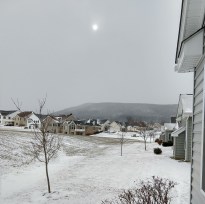
I live in the Eastern United States.  My husband is from the Western United States.  He has always laughed at the “hills” we call “mountains” on the east coast.  The mountains out west do put our eastern mountain ranges to shame.

So why are some mountains bigger than others?  How do mountains form?  How do scientists know this?  What kind(s) of scientists study mountain formation?

And this makes me crazy – why do the leaves at the bottom of our local mountains lose their leaves in the fall before the leaves at the top of our mountains?  Isn’t it colder on the top?  Isn’t that why trees lose their leaves?  I think I am going to find out exactly what kind of trees we have that are doing this, do some research, and create a book to explain this! (Yep – I started with a picture of a mountain and now I am writing a book about a specific tree and how and when it loses leaves in the fall – that is called an authentic project!)

Authentic Project Ideas – Solutions for Traffic Gridlock

img_20190112_154827038_hdr

I just returned from a trip out to Los Angeles.  While there I took this picture of the city from one of the highways.  When I looked at the picture later, I was shocked that I managed to capture an LA highway with only two cars on it.  We were totally surrounded by traffic, so I have no idea how I managed this picture!  (“Twilight Zone” moment.)

Los Angeles has some of the worst, if not worst traffic in the United States.  There are many cities around the world, including LA, that are on the verge of total gridlock. So, not only would a great authentic project be for students to start to think of creative ways to solve these traffic nightmares, it will most likely be one of our current young students who ends up helping to solve this problem as an adult.

Mass transit, tele-commuting, self-driven cars, monorails, flying cars…  Ideas?  Plans?  Diagrams?  Models?


Authentic Project Ideas – The Polar Vortex

cold weather

We are currently experiencing some of the coldest weather that I can ever remember.  Our high today was 9 degrees Fahrenheit/-12 degrees Celsius.  The meteorologists on The Weather Channel blamed a polar vortex.  What is a polar vortex?  What causes a polar vortex?  Can you draw a polar vortex?  Make a model?  Does a polar vortex start at the North Pole?  South Pole?

Do dark colors keep you warmer than light colors? Why?  Can you design a winter coat that will keep you warm in extremely cold weather?  (For authentic learning, go with student interest!  If your student is not interested in the weather, maybe you can get them interested in clothes and fashion for cold weather.  If they are reading, writing, and doing math, that is all that matters!)

And if you don’t see another blog post from me for awhile, my fingers froze to the keyboard and I am waiting to defrost!

One School’s Journey is Shortlisted for the Chanticleer International Book Awards

Blog Shortlist-OSJ copy

I am very excited to announce that One School’s Journey made Chanticleer International Award’s Shortlist for Instruction and Insight Books.  I am so very proud of this book and honored to be on this list.

One School’s Journey tells the story of the discovery and use of authentic projects to reach and teach students. While offering procedure, guidance, and examples, this is not a book of lesson plans.  Our bias is that for true authentic teaching you cannot follow someone else’s lesson plans.  Authentic projects come from the heart and are adapted to meet the needs and interests of students.   Our hope is that the reader will find inspiration from what we discovered as we set down the path to authentic teaching and learning.

One School’s Journey by Eleanor K. Smith and Margaret Pastor is available for free on Kindle Unlimited.  It is also available in paperback and on Kindle from Amazon.

5.5x8.5 Final Cover copy

Authentic Teaching Opportunities – Project Presentations, and more…

state fair 1

Adults often do many things for children that they can do for themselves, especially when preparing for a project.  We all know how important it is to be prepared for a lesson with students.  But being prepared, and adults doing work that students can learn from, are two very different things.  Planning and gathering materials for a project are important activities that students can and should be involved with.  When plans miraculously happen, and materials just appear, many learning opportunities are lost.

When we presented the State Fair to other groups of students, many math opportunities occurred.  There was measurement to plan how to set up the fair in the space we had available.  There was discourse and compromise among students to agree on how to place each state in the fair – Alaska wanted to display the states alphabetically, Texas by size, California by population…   A schedule was developed – after the students figured out how much time each group would need at the fair based on number of displays to visit and how much average time would be spent at each display.  Groups were invited based on this schedule.  Then the schedule was adjusted for groups that had a conflict with the available times.  Then the schedule was re-adjusted after the first day when the students realized larger groups and older students needed more time at the fair than smaller and younger groups, etc.

There are many math opportunities for parents working with children at home as well.  When inviting other children over make sure your child is involved in this discourse.  You would be surprised how much math you use every day without even realizing it.   (Except of course when I balance my checkbook.  Then I totally realize how much math is involved as I try to make sense of the usual mess I have made!)

Authentic Project Ideas – Airplane Engines

Engine

How do airplane engines work?  What is the difference between how propellers work and how jet engines work?  Some airplanes have hybrid propellers/jet engines, how do those work?

Authentic projects often start with a simple question, lead to research, and end with a student construction of a 747 (if you are lucky, it will just be a model).

The State Fair Project – Teaching Math

State Fair 2

When we developed The State Fair Project in fourth grade there were countless opportunities to use math.  During the year we were constantly looking at statistics for each state.  Size, population, socio-economic make-up, average temperature, significant dates…  All of these numbers were looked at and discussed.  The numbers were used not only to compare and contrast the 50 states but to develop some cause and effect hypotheses.

If the average temperature of a state was warmer than most, how would this effect the size of the population.  How about the average age of the population?  Why would older people tend to live in a warmer climate? Why would more Olympic skiers grow up in specific states?  But, why were there Olympic figure skaters training in Florida?

Every statistic became a jumping off point for further discussion and research.  Questions created more questions.  The use of math was constant, fluid, and authentic. (And of course, reading and writing skills were strengthened as well.)

*This authentic project can be easily adapted for territories, counties…whatever system the country you are studying uses.

Authentic Project Ideas – NASA’s InSight

Scan 9   Student Designed and Built Lander      

NASA successfully landed another spacecraft on Mars last week.  My husband and I watched the landing and both of us had tears in our eyes.  It is so totally amazing when you stop and think about what NASA has accomplished.  We were just blown away.  (We were also very impressed with the extremely cool “Star Trekkie” shirts that everyone in Mission Control was wearing during the landing.  Don’t tell my husband, but one is on order for him for a holiday gift!)

The mission of this stationary craft is to study the deep interior of Mars.  Launched along with InSight but flying separately were two CubeSats.  MarCo A and B, nicknamed Wall-E and Eva (from the Pixar film Wall-E) are now in orbit around Mars.

The authentic projects that students could do regarding InSight and the CubeSats are endless.  What is InSight’s mission?  What mission firsts will take place?  Is InSight a rover?  What is the mission of the CubeSats? If you could design a mission to Mars what would your design be?  What would you hope to accomplish?  This list could go on forever…

My Martian Colony Project started by simply showing a fifth-grade class NASA videos of the Martian Rovers Spirit, Opportunity, and Curiosity.  This authentic project took off from there and literally took over my professional life for the next four years!  (For more on this check out my book One School’s Journey – you can read it for free on Kindle Unlimited.)