Authentic Teaching – Party Planning

Scan 8 (1)

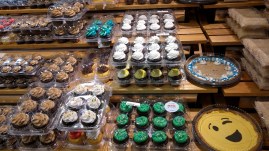
A great authentic way for children to learn about budgeting – give them a budget for their birthday party or other special event.  It is truly amazing to watch what happens when children have a budget to work with.  Not only is this great math practice, but whining ends, creativity increases, and kids end up having pride and ownership over their own special day.  Win Win!

Authentic Teaching – Grocery Store Math/Budgeting

IMG_20180801_082331

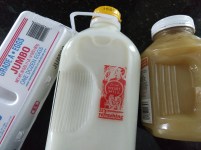
Children often want certain items at the grocery store (ok make that usually/always).  If treats are in the family budget, younger children can be given a number of items that they can pick (one is absolutely fine and appropriate).  If a package of treats is purchased, they can be counted, and agreed to be consumed one day at a time, or shared with family members (again counted to make sure there are enough).  Older children can be given a monetary amount that they can spend.  And even with young children it is never too early to explain what a budget is, and what can and can not be included in the family budget – another authentic way to reinforce math concepts.

Authentic Teaching – Grocery Store Math/Estimation

IMG_20190416_172831491

Estimation is often a tricky concept for kids to grasp.  Estimating what the total will be at the grocery store is a great authentic way to reinforce this concept.  Kids can start with estimating at $2.00 per item.  (This is also great practice for younger children to count by twos.)  This can be refined to adding more dollars for more expensive items and eventually rounding up or down to the nearest dollar.

*My grandmother taught me to do this using $0.50 per item…I guess we can teach inflation using this activity also!

Authentic Teaching – Grocery Store Math/Counting

IMG_20180801_082624

Young children can learn and practice counting by counting items as they go into the shopping cart.  Simple and quick, and an invaluable authentic counting practice.

It’s the authentic experience in reading, writing, and math (really in all academic disciplines) that truly make a difference in what a child will not only learn, but internalize and use.  Exposure in isolation does not have the same impact as the authentic experience.  Drilling for hours doesn’t come close to the impact of the quick but authentic hit.

The Authentic Experience

IMG_20180730_121327

It’s the authentic experience in reading, writing, and math (really in all academic disciplines) that truly make a difference in what a child will not only learn, but internalize and use.  Exposure in isolation does not have the same impact as the authentic experience.  Drilling for hours doesn’t come close to the impact of the quick but authentic hit.

Most teachers and parents are extremely busy and may overlook the quick and easy authentic experience for children.  One of the main focuses of this blog is a reminder about all of those wonderful authentic teaching moments out there.  Sometimes I’ll go into detail if I think the details are important, but usually I’ll try to just put out a quick note about anything that strikes me as a great authentic learning moment for kids.

This also pairs with my favorite teaching and parenting strategy, the “Model Your Thoughts Out Loud” strategy.  By voicing your thoughts out loud for organization, planning, problem solving, etc, you are modeling behavior for children to internalize.  This can be talking in front of children to a co-worker, spouse, partner, relative, friend, caregiver, or even out loud to yourself.  What is important is that kids hear how and why things happen.  Events don’t just magically occur and things don’t magically appear without organization, planning and problem solving.  I will post ideas about this as well.

My last main focus will be authentic project ideas for teachers.  Again, I will go into detail when the details are important, but often I’ll just relay ideas that come to me, or that I come across.
 

Authentic Teaching – Pizza and Fractions


IMG_20180730_171358

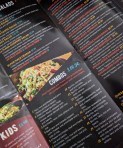
When ordering pizza – use fractions to discuss the slices and how many pieces everyone ate.  I ate 1/2 while you ate 1/3.  If I ate 1/2 of a small pizza and you ate 1/3 of an extra-large pizza, did I eat more?  If I ate 1/2 of a pizza and you ate 4/8 of the same pizza, who ate more?  Lots of authentic ways to teach fractions.

You can also teach the early vocabulary of fractions with young children.  When discussing ordering a pizza you can use words like whole, half, and quarter.  “Half” the pizza with cheese, and “Half” with pineapple and ham (my favorite).  Hmmm…gotta go order pizza for lunch now!

Authentic Teaching – Turning a Wait into a Math Lesson

IMG_20180725_143227

I was waiting for Metro on a summer day, in a Washington, D.C. station.  The station was hot, crowded, and the trains were running late.  As I stood waiting, I noticed two mothers nearby, both with young sons.  Both children were whining, and my initial reaction was relief that I was not also dealing with a young child in this heat, bad enough I had to stand here and wait myself.  But as I stood watching, I was struck by the different way in which the two mothers were dealing with the wait.

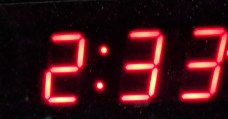
One mother was explaining that the trains were running slow because they were so crowded.  She pointed up at the display that showed the wait for the next train, and started counting down with the numbers on the display.  Her child stopped whining, and became engaged with watching the seconds and minutes count down.  Not only was she teaching her child patience with patience, but she was also developing math skills.

The second mother reacted to her whining child with a swat on the behind, and language that really surprised me. Language not appropriate for sailors in a bar (no offense intended to sailors in bars), and certainly no way to model behavior for a child.  She also threatened to not get him a promised treat later.  His behavior escalated, hers escalated…and I am sure I don’t need to explain the moral of this story.

Authentic Teaching – Planning the Next Vacation

IMG_20180627_155455

Whether it is over to the next town to visit relatives, or a vacation involving hotels and restaurants, children of all ages should be involved in the planning of, and preparation for travel.

Children can and should read about destinations before they get there.  Younger children can watch videos.  This is not only great authentic reading (or pre-reading) practice, it allows children to have expectations and ownership for the trip.  Not only does this increase reading skills and knowledge, but improves behavior.

Looking at pictures of grandma and her cane can lead to conversations about how grandma can’t chase young children around her house.  Books about the ocean lead to increased knowledge about our oceans, and the required rules to enjoy them safely.

Depending on the age and abilities of your children, they can also be involved in researching and planning a trip.  One of the most interesting and fun hotels I stayed in was found by my ten-year-old daughter, researching a place to stay overnight on our way home from a gymnastics meet.  (She also knew what my budget was and found a hotel within this range – authentic math practice.)

All children can and should help pack for a trip.  Packing lists can be made by parents to be followed by children (pictures work for pre-readers). Not only are lists reading practice (and writing for an older child who can write the list as well) but teach children that there is preparation, organization, and planning for travel.  Older children can do most of the packing themselves with some supervision.  For teenagers, that’s another story, just be happy if they pack for the right season. (Pick your battles here!)


The Authentic Learning Experience


Scan 6 (4)

Ingredients for an Authentic Learning Experience:

Ownership

Early foundation

Real-world application

Deliberate incorporation of student interest

Openness to the unplanned learning opportunity

Integration of content

Active learning

Valuing student inquiry

Learning from failure

Engagement

From One School’s Journey by Eleanor K. Smith and Margaret Pastor (coming Fall 2018)