Being Authentic

IMG_20190829_095426350_HDR

I recently received an email from a teacher asking me what inspired my ideas for projects.

When I was teaching, I was inspired by what the students were interested in.  Ok, that is not a totally honest answer.  I was inspired by my love of space, and in particular my fascination with Mars.  It was easy for me to be creative and stay engaged.  Doing research on my own time was not an added chore, I was already reading everything that I could get my hands on.  I didn’t need to hunt for materials, I was able to put what I had already collected to good use.  And my enthusiasm for Mars was contagious.  When a teacher is excited and engaged, the students become excited and engaged.

But, a good authentic project requires the teacher to listen to student discourse and alter plans accordingly.  With the Martian Colony Project that was easy, because we could incorporate just about anything into the open-ended plans for our colony.  Sports – no problem – we created a Martian football league.  Fashion – clothing designs for Mars.  Government – that was huge – laying the groundwork for a new colonial government (easy tie in to the formation of our U.S. government, tons of history lessons there). Spa – Hey, I wasn’t spending the rest of my life on Mars with a bunch of fifth graders without a lot of manicures, pedicures, and pampering!

Every one of these topics involved a basic understanding of Space Exploration and Mars, and included almost unlimited opportunities for reading, writing, math, social studies, science…

Even the planning for the spa, actually especially the planning for the spa, involved a great deal of research, writing, math, science… (The spa started as a snarky suggestion from a group of fifth-grade girls who were doing everything possible to not engage in the colony.  These girls ended up being our most engaged students.)

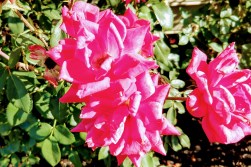
Now that I am retired (forever a teacher, however), I have time to stop and smell the roses.  A whole lot of roses!  And I photograph everything for my scrapbooks.  And invariably I end up seeing authentic projects in these photos.  (And entering them in our local Grange Fair and winning a lot of ribbons, but that is another story!)

Being retired means that I can spend my time following my passions – like writing this blog!  I can spend time doing the things that I love to do. I am being authentic.  And when you are being authentic, doing something you love to do, you want to explore and learn more.  Isn’t that what good teaching should be?

Authentic Project Ideas – Rainbows

rainbow

The photo above as authentic inspiration – this is one that can go in a million different directions…

Authentic Science:  What causes us to see a rainbow?  What causes the different colors?  Why are some rainbows more colorful than others?

Authentic Math:  Is it possible to figure out the diameter and radius of a rainbow?

Authentic Research/Reading:  Read about rainbows.  Learn about rainbows.

Authentic Literature: Read stories that feature rainbows.  How did the “pot of gold at the end of the rainbow” tale start?

Authentic Writing:  Write a report about rainbows.   Write a fiction story featuring a rainbow.

Authentic Creation:  Create a diorama, a poster, storyboard, video, photo journal…

Remember in authentic learning there is a starting point or prompt, and your student(s) can go anywhere from there.  (Rainbows – Rain – Building a Rain Gauge…Rainbows – Lack of Rain – Irrigation Techniques…) And not all authentic learning leads to a big project.  Sometimes a quick hit and time to move on…

The sky is the limit (pun intended).

We Pause for an Authentic Station Identification

IMG_20190812_082405588

This is my 100th post!  I started this blog over a year ago to promote my first children’s book.  That is the total, honest truth. But being authentic to myself, the purpose of the blog quickly changed.

I live in a retirement community near a major university.  Many of the people in my neighborhood are retired professors and savvy about the book publishing and promotion world.  When my first book came out, the women in my knitting group told me I needed a presence on the web to promote my book. They told me I needed to start a blog.  They actually chased me out of the knitting group that day, and sent me home to start my blog.

The only problem was, I had never been on a blog!  I didn’t know what a blog was.  So, I started to do some research and by the end of the day I had opened my blog.

The-Educational-Journey started as a vehicle to promote my books, but it quickly moved beyond that.  It took me about five minutes into creating my blog, that I realized it could be a platform for something I am truly passionate about, authentic learning – also referred to as project-based learning.  (I am very passionate about my books, but honestly not that passionate about marketing.)

Even though I was retired, I realized that everywhere I looked I still saw projects and authentic opportunities.  My blog gave me the platform to share these ideas.

I keep thinking that eventually I will run out of ideas.  Eventually, my weekly posts will become monthly.  This might happen, but now I kind of doubt it.  If anything, I am seeing more and more authentic project ideas every day.

Ironically another hobby has “upped my game.”  I joined a scrapbooking group in my community and have learned to photograph everything.  You just never know when you will want a photo of something you did or saw for a scrapbook page.  Not surprisingly, these photos also inspire ideas for authentic learning and projects.

As a retired (but forever) teacher, I now have time to “stop and smell the roses.” And each and every one of these roses gives me an idea for a new authentic experience.  And authentic ideas often lead down a path to unexpected new and different ideas.

If you think about it, I photograph things I am interested in or passionate about.  These photos represent authenticity to me.  I don’t photograph things that don’t interest or inspire me.  So, staying authentic keeps me engaged and excited and learning.  This is the way authentic learning works!  It grabs you, engages you, and doesn’t let you go. (And if I ever post a photograph of a snake, you can be sure my husband took the picture, I am having an “off” week, and decided to blog about project ideas with snakes – YUCK!)

You’ve made 100 posts on The Educational Journey.
Authentic Project Ideas – Bridges

Bridges

Driving through a major US city recently, we saw many bridges.  Some were interesting, some really ugly, and a few were very attractive.

I really liked this bridge, and took many photos, as we were stopped in a major traffic jam.  A tunnel ahead of us was unexpectedly closed. (Hmmm…tunnels, traffic jams…I definitely see a few more blogs coming.)

What type of bridge is in the photo above?  What are the different types of bridges built today?  What about bridges of the past? How are bridges designed to support weight?  Does the geology and geography of an area influence the bridge design?  Covered bridges…definitely another blog about that!

Lots of authentic research, lots of possible authentic projects:  building a model bridge; writing about the history of bridges; creating a slide show about famous bridges, why they are famous, and where they are located; creative writing about bridges (Three Billy Goats Gruff might be an inspiration).  Actually, how many children’s stories feature a bridge…adult stories…movies…?

Authentic Project Ideas – Fences

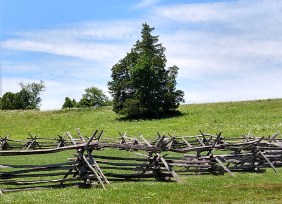
SplitRailFence

Driving along a country road in Virginia, I ran across a beautiful split rail fence.  It was part of the fencing around a Civil War battlefield.  I started to think about these split rail fences, and the reasons why fences were constructed that way in centuries past.  Then I started to think about modern fences, some that are really beautiful and fit in with the landscape, and some really ugly fences.

An authentic project might be to research the history of fences.  How about a catalog of all of the ways fences have been, and are currently built. Or maybe, how the local environment impacts what materials are used in fences.  (Years ago, I saw wonderful playgrounds in Iceland that were carved into the lava flows, the surrounding lava becoming the “fence.”)  How about what fences are popular today and why?

A fantastic authentic project might be to design a modern, affordable, environmentally friendly fence that is not ugly!  Perhaps this might lead to a future venture/business into actual fence design and production!

Fences are used to keep dogs in yards.  There are many interesting breeds of dogs.  Do different breeds require different types of fences (material/height)? Remember – authentic learning means that a student’s passion may change the direction of the project.  If talking about fences leads to an in depth project about dog shows and how fencing and enclosures are used at these shows – that IS authentic learning!


Authentic Project Ideas – What Was This?

IMG_20190418_125054834_HDR

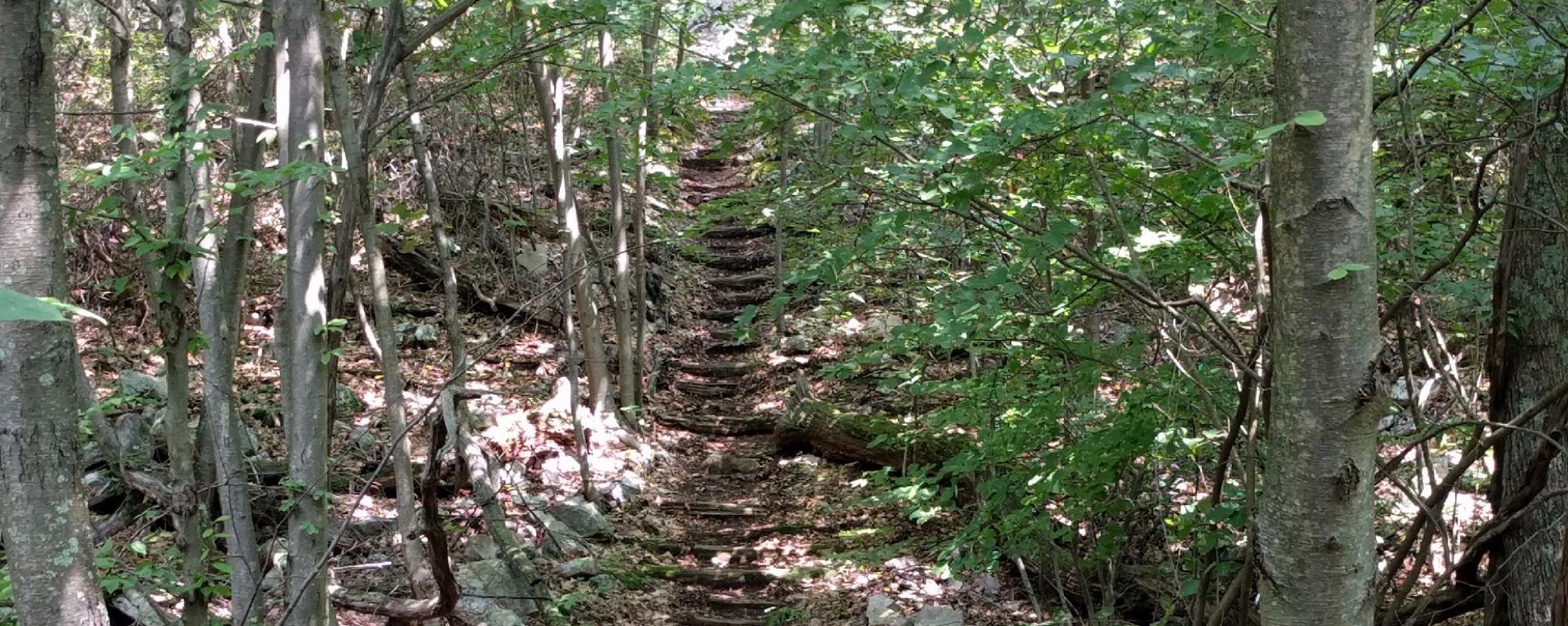
One photograph can be the jumping off point for an authentic project. What was this?  Who built it?  When? Why?  What happened to it? (history/research – reading)

Where was this photo taken? (geography) What clues are in the photo to help you figure this out? (botany/geology)

Design and build a model of what you think this structure was. (math)  Creative writing story starter? (writing)…

TEX THE EXPLORER: JOURNEY AROUND THE EARTH By Ellie Smith, Illustrated by Eyen Johnson

front cover

I am very excited to announce that the second book in our award-winning “Tex the Explorer” series is finished and published!  Tex the Explorer: Journey Around the Earth is available on Amazon.  Eyen and I are really proud of this book!

Tex is a young T-Rex.  He loves to explore.  For his birthday his parents gave him an airplane.  Tex is off to explore the seven continents of the Earth!


Authentic Teaching – Teaching Outside the Box

IMG_20180513_054644 G

I had an opportunity a few years ago to visit the Falkirk Wheel in Scotland.  I knew that this was some sort of structure that raised and lowered boats, sort of like a lock does.  However, I really couldn’t picture it and was totally surprised when our tour arrived at the Wheel.  It was nothing like what I imagined.

To me, this structure truly represents why authentic teaching and learning is so important.  The Falkirk Wheel is totally different from traditional locks.  This represents true “outside of the box” thinking.

We are heading into a future that we can’t even imagine.  Educating children in the traditional way of “one correct answer, one way to accomplish your goal, color inside the lines using the correct color, stay inside the box” is not going to prepare them for the future.  The jobs that many of our children will hold don’t even exist yet.  And many of the jobs people hold now, will not exist in the future.

Authentic teaching prepares students for this future world.  Make it real.  Make it count.

*And riding in a boat that was raised by the Falkirk Wheel was really cool!

Authentic Project Ideas – Umbrellas

Umbrellas2PR

What is the history of the umbrella?  When was the umbrella invented?  What have umbrellas been used for? (Umbrellas are being used in a very creative way in the above photograph.)

Authentic Research – You might be surprised at the lengthy history of the umbrella.

Authentic Project – Maybe a student can design a better umbrella.  Or create a beautiful umbrella.  Develop a timeline for the history of the umbrella.  Or maybe the above photograph is an inspiration for a creative writing project.

Or – what causes rain?  Remember in authentic learning students often end up exploring a related/different topic inspired by the original topic.  Umbrellas shield a person from rain, so what causes rain?  What causes a drought?  Can we make it rain?  What happens when there is a rain delay in a baseball game?…

Authentic Geography – If you want to know where this picture was taken, contact me through my blog, I will be happy to give you some clues!

Authentic Project Ideas – Building a Bird Feeder

Birds

There are so many authentic projects that can be inspired by bird feeders.  Do different kinds of birds need different kinds of feeders? Do different kinds of birds eat different kinds of bird food?  Once you start feeding birds it is important to not stop.  Why?  How about designing and building a bird feeder?  (Research/reading, writing, math, science…)

In my neighborhood we have a huge problem with bears feeding from the bird feeders.  To the point that we have been asked to not put out bird feeders.

So maybe a great authentic project would be to design a bear-proof bird feeder.  Let me know what you come up with –  I would love to be able to put up a bird feeder in my backyard!